
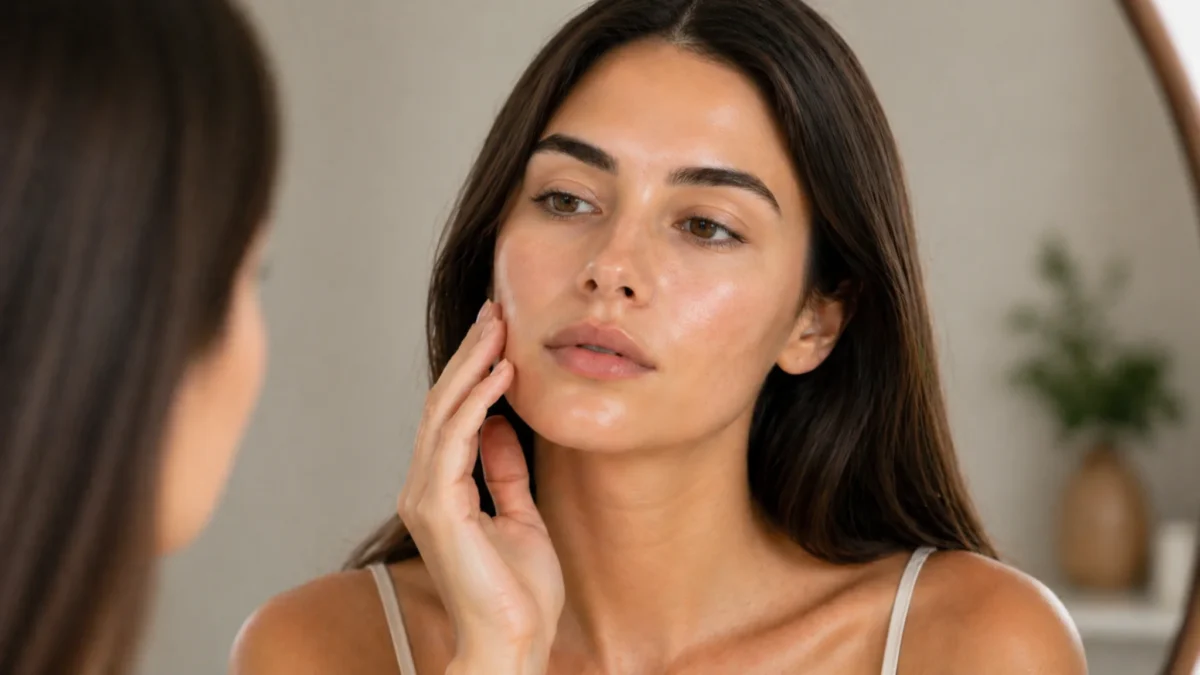
If your skin has been looking dull lately—even with a routine that feels right—you’re not alone. Many dull skin causes are subtle. They tend to build gradually, shaped by hydration, daily habits, and how your skin responds to what you use.
What are the main dull skin causes? Dull skin is usually caused by a combination of factors such as dehydration, uneven skin texture, lifestyle habits, and how your skin responds to products over time. Even with a consistent routine, these dull skin causes can affect how your skin looks and feels.
Your skin doesn’t always reflect how much effort you put into it.
You may be following a consistent routine, using well-formulated products, and still notice that your skin looks flat, uneven, or slightly tired. This is often when people start wondering why their skin looks dull or asking why is my skin dull even after skincare.
In most cases, causes of dull skin are not linked to one single issue. They tend to come from multiple small factors—how your skin retains moisture, how its surface reflects light, how your routine is structured, and how your skin adapts with consistency.
This is why your skin can sometimes look different from day to day, even when nothing seems to have changed.
Key Takeaways
- Most dull skin causes come from a combination of factors rather than a single issue.
- Hydration, routine consistency, and daily habits all influence how your skin looks.
- Skin can appear dull even when your routine seems correct, especially if it doesn’t fully match your skin’s needs.
- Simplifying your routine is often more effective than adding more products.
- Small, gradual changes tend to have a bigger impact than sudden adjustments.
What Does Dull Skin Actually Mean?
Dull skin isn’t always easy to define—but you usually notice it when your skin stops looking as fresh or radiant as it normally does.
Skin is often described as dull when it reflects less light, appears uneven in tone, or feels slightly rough in texture. It may also look tired or less vibrant, even when nothing seems obviously wrong.
These changes are usually subtle. In many cases, the skin is still functioning normally, but small imbalances can affect how it appears.
This is why dull skin causes are often misunderstood. The issue is rarely about visible damage. More often, it’s linked to how the skin holds moisture, how evenly its surface reflects light, and how it adapts to different conditions over time.
Many people start noticing this when they wonder why their skin looks dull or feel that their skin has lost its natural glow without a clear reason.
Why Your Skin Looks Dull Even With a Good Routine
One of the most common questions is: Why is my skin dull even after skincare?
A routine can be technically correct and still not produce visible results. This is often where many dull skin causes become less obvious. Skincare is not only about what you use—it’s about how everything works together in practice.
The cleanser can affect how your skin tolerates other products. How often you use certain ingredients can shape how your skin adapts over time. Even the way you layer products—or when you use them—can quietly influence how your skin responds.
When these elements are not fully aligned, the result is not always irritation or breakouts. More often, it shows up in subtle ways—skin that looks unchanged, less radiant, or slightly tired.
Skin can look dull even when everything in your routine is technically correct—because appearance is shaped by more than products alone. Many causes of dull skin are easy to overlook because they develop gradually, influenced by factors like routine consistency, environment, and daily habits.
In many cases, what looks like dullness isn’t a lack of effort — but a mismatch between what your skin needs, and whether it has had enough time and consistency to fully respond.
Why Your Skin Can Look Better Some Days — Even With the Same Routine
You can follow the same skincare routine every day and still notice that your skin looks noticeably better on some days than others.
This can feel inconsistent — especially when nothing in your routine has changed.
In most cases, the difference isn’t caused by the products themselves. It’s shaped by how your skin responds to everything around that routine.
Your skin reflects more than what you apply. It reflects how well it was able to retain moisture, how balanced it feels, and how much time it had to adjust and recover.
On days when your skin feels more balanced, smoother, and better hydrated, it naturally reflects light more evenly. This is often when your skin looks clearer, brighter, and more radiant — even without changing anything in your routine.
On other days, small shifts can affect this balance. These shifts are often subtle:
- slight changes in hydration levels
- how your skin responded to products over the past few days
- environmental factors like air quality or humidity
- how well your skin barrier maintained its balance
These differences don’t always mean something is wrong. They often reflect how your skin is adjusting in real time.
Because of this, consistency in skincare is not only about using the same products — it’s also about allowing your skin enough time to respond to them.
The Most Common Dull Skin Causes
Dull-looking skin is often not caused by a single issue. In most cases, dull skin causes come from a combination of small changes that affect how your skin reflects light, holds moisture, and responds over time.
1. Can Dehydration Make Your Skin Look Dull?
Skin can be dehydrated without feeling dry. It may still produce oil while lacking water, which creates an imbalance on the surface.
When hydration levels are low, the skin becomes less smooth, and light does not reflect evenly. This is one of the most common causes of dull skin, especially when routines focus more on products than on maintaining hydration balance.
2. Does Uneven Texture Make Skin Look Less Radiant?
Skin naturally sheds dead cells, but this process is not always perfectly even. When buildup occurs, the surface becomes slightly irregular.
Even small texture changes can affect how light interacts with the skin, which is why your skin can start to look dull over time, even if nothing feels noticeably different.
When uneven texture is involved, adjusting how often you exfoliate can make a noticeable difference—our guide on ‘How often to exfoliate?‘ explains this in more detail.
3. Can Changing Your Routine Too Often Affect Your Skin?
In many cases, skin adapts over time. When routines change frequently, that process is interrupted.
Switching products often, changing how frequently you use certain ingredients, or skipping steps can all affect how your skin responds. This makes it harder to see visible results, which is one of the more subtle dull skin reasons.
4. How Does the Skin Barrier Affect Dullness?
The skin barrier plays a key role in how your skin looks and feels. Because it directly affects how smooth and balanced your skin appears, learning how to support your skin barrier can be helpful—especially with barrier-focused ingredients like ceramides.
When it is under stress, moisture retention may decrease, sensitivity may increase, and overall balance can shift. This doesn’t always show up as irritation. In many cases, it simply shows up as skin that looks less radiant or slightly off.
5. Why Does Lack of Sleep Make Your Skin Look Tired?
Many people wonder: Why does my skin look tired all the time?
Sleep directly affects how your skin appears the next day. Even small changes in sleep quality can influence tone, brightness, and overall freshness, which is why your skin can look dull even with a good routine.
6. Can Your Environment Affect How Your Skin Looks?
Your skin is constantly responding to its environment.
Indoor air, humidity levels, and seasonal changes can all influence hydration and surface balance. These are often overlooked dull skin causes that can affect how your skin looks day to day.
7. Can Using Too Many Products Make Skin Look Dull?
Using multiple products does not always improve results.
In some cases, it creates overlap between similar ingredients, adds unnecessary steps, and makes it harder to understand how your skin is reacting. Over time, this can reduce clarity in your routine and affect how your skin responds, leading to a dull or unbalanced appearance.
Why Does Your Skin Look Different From Day to Day?
Skin is not static. It responds continuously to both internal and external changes.
Even when your routine stays the same, your skin can look different from one day to the next. This is often when people ask why their skin looks dull some days and better on others.
Your skin is influenced by:
- internal changes such as sleep and energy levels
- external conditions like air quality and humidity
- ongoing adaptation to products and routines
This variation is normal. It doesn’t always mean something is wrong—it often reflects how your skin is adjusting in real time.
Subtle Signs Your Skin Is Out of Balance (Even If It Looks “Normal”)
Skin doesn’t always show imbalance in obvious ways like breakouts or irritation. In many cases, it appears in much quieter, more subtle changes.
Your skin may still look “normal” at a glance, but feel slightly different in how it behaves or appears.
You might notice:
- your skin looks flatter or less radiant than usual
- your complexion appears slightly uneven without a clear reason
- your skin feels less smooth when you apply products
- your makeup doesn’t sit the same way it normally does
- your skin looks fine, but not as fresh or balanced as it usually feels
These small changes are often early signals that your skin is not fully in balance.
In many cases, this doesn’t require adding more products. It simply means your skin may need more consistency, fewer overlapping steps, or more time to adjust.
Skin tends to respond best when it’s not constantly being changed. When your routine becomes more stable, your skin has a better chance to return to a more balanced, even-looking state.
What Helps Improve Dull Skin Appearance
Some of the most noticeable changes in your skin don’t come from what you add — but from what your skin has time to respond to.
Improving how your skin looks is not always about adding more products. Addressing the underlying dull skin causes is often what makes the biggest difference.
If your skin looks dull even with a consistent routine, the issue is usually not a lack of products—but a lack of alignment. This is why many people searching how to fix dull skin naturally don’t always see results by adding more steps.
Often, it’s not about doing more—it’s about doing less, but more consistently.
If your routine feels overwhelming, simplifying your approach can often lead to better results—this is why a simple, consistent skincare routine is often more effective than a complex one.
In many cases, improving dull skin is less about introducing new products and more about removing what doesn’t work.
Consistency plays a key role. When your routine stays stable, your skin has time to adjust, which can make changes more noticeable. Keeping your routine balanced—without too many overlapping products—can also help reduce unnecessary stress on the skin.
Hydration is another factor that is often underestimated. Even when the right products are used, a lack of hydration balance can affect how smooth and light-reflective the skin appears.
Allowing enough time for results is equally important. Skin doesn’t change instantly, and visible improvements may take time depending on how well your routine matches your skin’s needs.
Most importantly, paying attention to how your skin responds can help you understand what actually works for you. This is often what separates routines that feel right from those that create visible change.
Why Dull Skin Has More Than One Cause
Dull-looking skin is often not caused by a single issue. In many cases, dull skin causes develop as different factors begin to overlap.
Hydration levels, surface texture, routine structure, environmental exposure, and daily habits all influence how your skin behaves. On their own, these factors may seem minor—but together, they can affect how evenly your skin reflects light and how balanced it looks.
In some situations, what looks like dullness is actually a mismatch between what your skin needs and what it’s receiving.
Sometimes, nothing in your routine changes—but your skin still looks different. These shifts can happen gradually, even when there is no obvious trigger.
FAQ About Causes of Dull Skin
Why is my skin dull even after skincare?
Even with a consistent routine, your skin can still look dull if different dull skin causes are not fully aligned. Hydration levels, routine consistency, and how your skin adapts over time all play a role, which is why your skin can look dull even when your routine seems right.
What are the most common dull skin causes?
The most common causes of dull skin include dehydration, uneven texture, lifestyle factors, and routine imbalance. These factors often overlap, which is why dullness usually develops gradually rather than from one single cause.
Why does my skin look tired all the time?
Many people ask why does my skin look tired all the time, especially when their routine hasn’t changed. This is often linked to sleep quality, stress levels, and daily rhythm, all of which can influence how your skin appears.
How long does it take to improve dull skin?
Improving how your skin looks usually takes time. Skin adapts gradually, so visible changes may take a few weeks depending on consistency and how well your routine matches your skin’s needs.
Can dull skin improve on its own?
Dull skin can sometimes improve on its own as your skin naturally renews and adapts. However, lasting improvement usually depends on how well key dull skin causes—such as hydration, routine consistency, and lifestyle factors—are balanced over time.
Disclaimer: This content is for informational purposes only and does not constitute medical advice. Skin responses can vary depending on individual factors, and it may be helpful to consult a qualified professional for personalized guidance.
Written by Pure as Beauty