

Learn how often you should exfoliate based on your skin type, product strength, and overall sensitivity. Discover how to build a safe exfoliation routine, recognize signs of over-exfoliation, and protect your skin barrier without overdoing it.
Most people exfoliate 1–3 times per week, depending on skin type, formula strength, and overall sensitivity. Dermatology guidance often suggests this range, with oily skin tolerating slightly more frequent exfoliation and sensitive skin benefiting from once weekly or less. Over-exfoliating can disrupt the skin barrier, so adjusting your exfoliation routine based on skin tolerance is essential.
Exfoliation removes dead skin cells from the surface of the skin, helping refine the look of texture, tone, and overall radiance. The ideal exfoliation schedule varies based on your skin type, the type of exfoliant used, and whether your routine includes active ingredients such as retinol.
When used correctly, exfoliation can support smoother, brighter-looking skin. However, using exfoliants too frequently may weaken the skin barrier and increase sensitivity, while exfoliating too rarely may allow buildup that leaves skin looking dull or uneven. Consistency matters more than intensity when it comes to exfoliation.
If you’re unsure whether your skin is dry or dehydrated, understanding the difference can help refine your exfoliation approach. Finding the right exfoliation rhythm can feel confusing at first, especially with so many product types and skin needs.
This guide explains how often to exfoliate based on skin type, exfoliant intensity, and signs your skin may need a reset. A balanced exfoliation rhythm supports smoother, clearer-looking skin—without compromising barrier integrity.
Key Takeaways
- Exfoliation frequency depends on skin type and product strength
- Oily skin tends to tolerate exfoliation differently than dry or sensitive skin
- Signs of over-exfoliation include tightness, redness, and increased sensitivity
- Retinol users may benefit from spacing exfoliation on alternate nights
- Hydration and sunscreen help support overall skin balance
Table of Contents
- What Is Exfoliation?
- How Often Should You Exfoliate?
- How Often to Exfoliate Your Face
- How Often to Exfoliate Your Body
- How Often to Exfoliate by Skin Type
- Chemical vs Physical Exfoliation
- Signs of Over-Exfoliation
- Should You Exfoliate Every Day?
- When to Exfoliate: Morning or Night
- Can You Exfoliate If You Use Retinol?
- How to Exfoliate Safely
- FAQ About Exfoliation
What Is Exfoliation?
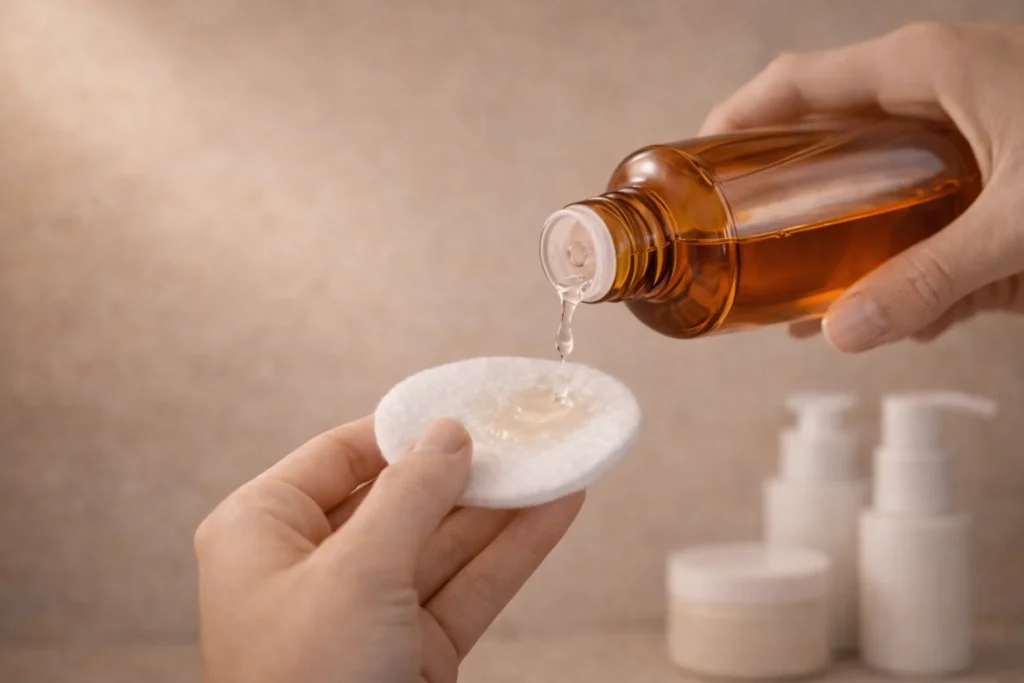
Exfoliation is the process of removing dead skin cells from the surface of the skin to improve the look of texture, tone, and overall clarity. This process affects the outermost layer of the skin, known as the stratum corneum, where dead skin cells can build up and leave the skin looking dull.
Exfoliation helps keep the skin surface smoother by clearing this buildup and allowing skincare products to absorb more effectively.
There are two main types of exfoliation: physical and chemical. Physical exfoliation uses scrubs or tools to remove dead skin cells from the surface, while chemical exfoliation uses ingredients such as AHAs, BHAs, PHAs, or enzymes to dissolve them. Common examples may include glycolic acid, lactic acid, and salicylic acid.
While both methods can be effective, results depend more on frequency and formula strength than on type. Over-exfoliating may weaken the skin barrier, while infrequent exfoliation may lead to buildup. A balanced approach helps maintain smoother-looking skin without compromising barrier integrity.
How Often Should You Exfoliate?
Most people exfoliate 1–3 times per week, depending on skin type, formula strength, and sensitivity. Sensitive skin may require less frequent exfoliation, while oily skin may tolerate it slightly more often.
Exfoliation frequency depends on skin type, exfoliant type, and ingredient concentration. Chemical exfoliants, such as toners or acids, may require different spacing than physical exfoliants like scrubs or masks. Higher-strength formulas are typically used less frequently, while gentler options may be used more consistently.
Dermatologists generally recommend starting slowly and adjusting frequency over time.
If you’re deciding how often to exfoliate, a few factors can help guide your routine:
- Skin type (oily, dry, sensitive, or combination)
- Type of exfoliant (chemical, enzymatic, or physical)
- Use of active ingredients such as retinol
- Skin tolerance after exfoliation
Consistency matters more than intensity when it comes to exfoliation.
Quick Exfoliation Guide
- Oily skin: 2–3 times per week
- Dry or tight-feeling skin: 1–2 times per week
- Sensitive or reactive skin: once weekly or less
- If you use retinol: alternate nights
Adjust your exfoliation schedule based on comfort, not pressure to increase frequency.
How Often Should You Exfoliate Your Face?
Facial skin is often exfoliated around 1–3 times per week, depending on skin type, formula strength, and sensitivity. Sensitive skin may benefit from less frequent exfoliation, while more resilient skin may tolerate slightly more.
Because facial skin is more delicate than body skin, a gentler approach is usually preferred. Exfoliation tends to work best when low- to moderate-strength formulas are used and strong actives, such as retinol, are spaced appropriately.
Exfoliating the face is often better tolerated when:
- Gentle formulas are used
- Strong actives are not layered too closely
- Skin tolerance is monitored over time
- Hydration and daily sunscreen are maintained
If tightness, redness, or increased reactivity appears, spacing applications further apart may help maintain comfort and support the skin barrier.
How Often Should You Exfoliate Your Body?
Body exfoliation may be done around 1–2 times per week, depending on skin thickness, dryness levels, and overall sensitivity. Areas such as arms, legs, or rough patches may tolerate more consistent exfoliation than delicate areas.
Because body skin is generally thicker, it may handle slightly more frequent exfoliation than the face. Still, frequency should be adjusted based on skin tolerance and seasonal changes.
Body exfoliation tends to work best when:
- Focused on rough or textured areas
- Paired with moisturizing steps
- Adjusted during colder or drier seasons
- Reduced if irritation increases
If dryness or sensitivity becomes more noticeable, reducing frequency is usually more effective than increasing intensity.
How Often to Exfoliate by Skin Type
Exfoliation frequency varies by skin type, formula strength, and overall skin tolerance. Oily skin may tolerate more frequent exfoliation, while dry or sensitive skin may benefit from a slower approach.
Below is a closer look at how exfoliation rhythm may differ across different skin types.
| Skin Type | Suggested Rhythm | Ingredient Focus | Common Mistake |
|---|---|---|---|
| Oily | 2–3x weekly | Salicylic acid (BHA) | Increasing frequency instead of adjusting strength |
| Dry | 1–2x weekly | Lactic acid / enzymes | Over-exfoliating tight skin |
| Sensitive | 1x weekly or less | Low-strength acids or enzymes | Layering with retinol |
| Combination | Target zones | BHA on T-zone | Full-face overuse |
| Acne-Prone | Consistent, moderate | Gentle BHA | Stacking actives |
Oily Skin
Oily skin often tolerates exfoliation more consistently, especially with beta-hydroxy acids such as salicylic acid, which can move into pores and help reduce visible congestion. However, increasing frequency may not always be more effective. Adjusting formula strength and spacing treatments tends to support better results with less irritation.
Dry Skin
Dry skin generally benefits from a slower exfoliation rhythm and lower-strength formulas. Ingredients such as lactic acid or enzyme-based exfoliants are often preferred for their milder profile. Increasing frequency when skin feels tight may lead to more discomfort rather than smoother texture, so spacing treatments tends to be more effective.
Sensitive Skin
Sensitive skin typically responds best to minimal stimulation. Low-strength acids or enzyme exfoliants are often better tolerated than more aggressive methods. Layering exfoliation with retinol or multiple actives may increase sensitivity, so allowing more space between applications helps maintain balance.
Combination Skin
Combination skin often benefits from targeted exfoliation rather than full-face application. Oil-prone areas, such as the T-zone, may tolerate more frequent use, while drier areas may require less. Applying exfoliation selectively helps reduce the risk of over-treating balanced areas.
Acne-Prone Skin
For acne-prone skin, consistency tends to be more effective than intensity. Salicylic acid is commonly used for its ability to reach into pores, but increasing strength or layering multiple actives may lead to irritation. A more balanced routine often focuses on moderate use and proper spacing.
Chemical vs Physical Exfoliation: What’s the Difference?

Exfoliation generally falls into two main categories: chemical exfoliation and physical exfoliation.
Chemical exfoliation uses ingredients such as glycolic acid, lactic acid, salicylic acid, or PHAs to dissolve dead skin cells and support skin renewal. These formulas are often found in toners, serums, or exfoliating treatments.
Physical exfoliation uses textured products such as scrubs, brushes, or tools to manually remove buildup from the surface of the skin.
Chemical exfoliation may be preferred for a more even and controlled result, especially for sensitive or acne-prone skin. Physical exfoliation may work well for targeting rough or textured areas when used gently.
Both methods can be effective when used at an appropriate frequency. The best choice may depend on skin sensitivity, ingredient tolerance, and how your skin responds to different types of exfoliation.
Best Ingredients for Exfoliation
Different exfoliating ingredients work at varying strengths and may affect the skin in different ways. Understanding how each ingredient behaves can help guide how often exfoliation feels comfortable.
Common exfoliating ingredients may include:
- Glycolic acid (AHA): Often used to help refine the look of skin texture and brightness
- Lactic acid (AHA): Typically considered a gentler option, often preferred for dry or sensitive skin
- Salicylic acid (BHA): Oil-soluble and commonly used to help reduce the appearance of clogged pores
- PHA (polyhydroxy acids): Milder exfoliants that may be better tolerated by sensitive skin
- Enzyme exfoliants: Fruit-derived enzymes that help dissolve surface buildup in a gentler way
Choosing the right ingredient may depend on skin type, sensitivity, and overall routine. Lower-strength formulas and gradual use often help support a more balanced approach.
Signs of Over-Exfoliation
Over-exfoliation may disrupt the skin barrier and increase sensitivity over time. Some dermatology guidance suggests that excessive exfoliation can contribute to barrier imbalance in modern skincare routines.
If you’re wondering how to tell whether you may be over-exfoliating, certain visible and sensory changes can offer useful signals.
Common signs of over-exfoliated skin may include:
- Persistent tightness after moisturizing: Skin that continues to feel tight even after applying moisturizer may indicate reduced barrier support
- Increased redness or stinging: Skin that reacts more easily — even to gentle products — may be showing signs of sensitivity
- Breakouts that appear more irritated: In some cases, breakouts may look more inflamed rather than congested when the skin becomes reactive
- Peeling or uneven flaking: Ongoing peeling may suggest that the skin needs recovery time rather than additional exfoliation
- Shiny or waxy-looking skin: A reflective or overly smooth appearance may sometimes indicate that the surface barrier has been over-processed
- Increased sensitivity to sun or products: Skin may become more reactive to sunlight or previously well-tolerated products
If your skin shows multiple signs of over-exfoliation, shifting toward a barrier-focused routine may help restore balance. Our guide to repairing a damaged skin barrier explains how to support hydration and resilience after over-exfoliation.
Should You Exfoliate Every Day?
If you’re wondering, “Is it okay to exfoliate every day?” the answer often depends on skin type, product strength, and how well your skin tolerates active ingredients. Daily exfoliation is only suitable for very gentle formulas and is not necessary for most skin types.
Daily exfoliation may work for some routines, but it often depends on skin type, formula strength, and overall skin tolerance. For many people, exfoliating a few times per week may be easier to tolerate than daily use.
Daily exfoliation is often better tolerated when low-strength formulas are used and strong actives, such as retinol, are not layered too closely. Paying attention to how your skin feels over time can help guide frequency more effectively than following a fixed schedule.
Daily exfoliation is more likely to be tolerated when:
- The formula is mild
- No other strong actives are used the same day
- Skin shows no signs of irritation
- Hydration and barrier support are consistent
However, exfoliating every day may lead to:
- Persistent tightness
- Redness or stinging
- Increased sensitivity to products
- Shiny or fragile-looking skin
- Irritated breakouts
Spacing exfoliation throughout the week often helps maintain better skin balance.
For many skin types, simplifying your routine improves tolerance. Our guide to building a minimal skincare routine explains how to reduce active overload without sacrificing results.
Daily vs Weekly Exfoliation
| Routine | Best For | Risk |
|---|---|---|
| Daily (mild) | Oily, resilient skin | Higher irritation risk |
| Weekly | Dry, sensitive skin | Slower visible results |
Morning or Night: When Is the Best Time to Exfoliate?
The best time to exfoliate depends on the type of exfoliant and the other active ingredients in your routine.
Evening exfoliation is generally preferred when using AHAs, BHAs, or retinol. Acids can temporarily increase sun sensitivity, so nighttime use reduces unnecessary UV exposure.
Morning exfoliation works with very gentle or enzyme-based formulas, provided sunscreen is applied consistently afterward.
Spacing active ingredients is often preferred over layering them in the same routine, especially when using acids and retinoids together.
In most routines, timing matters less than proper spacing. Avoid layering strong acids and retinol together, and allow recovery time between active treatments.
Can You Exfoliate If You Use Retinol?
Exfoliation may be used alongside retinol, but balance often matters. Because retinol supports skin renewal, layering strong exfoliants too frequently may increase the risk of irritation.
Spacing active ingredients is often preferred over combining them in the same routine, especially when using acids and retinoids together. Many routines alternate evenings — retinol on one night and exfoliation on another — rather than layering them.
Skin that tolerates retinol well may handle gentle exfoliation when treatments are spaced appropriately. If dryness, flaking, or sensitivity increases, reducing overlap may help maintain skin balance.
When used thoughtfully, exfoliation tends to work best as a complementary step rather than an aggressive addition.
If your routine includes retinoids, understanding how to layer actives safely can make a difference over time. Read our complete guide to using retinol correctly for detailed application timing and tolerance tips.
How To Exfoliate Safely
Safe exfoliation focuses on consistency rather than intensity. Using gentle formulas and spacing treatments appropriately may help support the skin barrier.
To exfoliate safely:
- Start with a low-strength formula
- Avoid layering multiple strong actives
- Monitor for signs of sensitivity
- Support the skin barrier with hydration
- Apply sunscreen consistently
What to Avoid When Exfoliating:
- Using multiple exfoliants in the same routine
- Applying exfoliants on already irritated skin
- Skipping sunscreen after exfoliation
Should You Moisturize After Exfoliating?
Moisturizing after exfoliating is often recommended to help maintain skin comfort and support the skin barrier. Exfoliation may temporarily increase transepidermal water loss (TEWL), which can make post-exfoliation hydration more important.
If you’re asking, “Should I moisturize after exfoliating?” the answer for many routines often leans toward yes — especially when aiming to support the skin barrier.
A well-formulated moisturizer may help:
- Replenish hydration
- Support barrier recovery
- Reduce the feeling of tightness
- Improve overall comfort
Using ingredients such as ceramides, hyaluronic acid, or soothing components may help maintain balance after exfoliation. Hydration after exfoliation may also help reduce the appearance of tightness and support overall skin balance.
Best Exfoliation Routine for Beginners
If you’re new to exfoliation, starting slowly may help reduce the risk of irritation and support better skin tolerance over time.
Beginners often start with once-weekly exfoliation using a low-strength formula and adjust gradually based on skin tolerance.
A simple beginner routine may include:
- Exfoliating once per week using a low-strength formula
- Choosing gentle exfoliants such as lactic acid, PHAs, or enzyme-based formulas
- Avoiding layering with retinol or other strong actives
- Following with a hydrating serum and moisturizer
- Applying sunscreen daily
What to avoid:
- Starting with high-strength acids
- Exfoliating multiple times per week too early
- Layering exfoliation with retinol in the same routine
If your skin feels comfortable, frequency may be adjusted gradually over time. Paying attention to how your skin responds often helps guide a more balanced exfoliation routine.
FAQ About Exfoliation
1. How often should you exfoliate your face?
Many skin types may feel comfortable exfoliating the face around one to three times per week as a starting point. Frequency may vary based on sensitivity, formula strength, and the use of active ingredients such as retinol.
2. How often should you exfoliate your body?
Body skin may tolerate exfoliation differently from facial skin. Many routines include exfoliating the body once or twice weekly, particularly on rough areas such as arms or legs. Frequency may vary depending on dryness levels and product intensity.
3. Is it okay to exfoliate every day?
Daily exfoliation may be tolerated with very gentle formulas. However, stronger acids used too frequently may increase dryness or irritation over time. Paying attention to how your skin responds may offer better guidance than following a strict daily routine.
4. What are the signs of over exfoliation?
Signs may include persistent tightness, redness, stinging, increased sensitivity, peeling, or skin that appears shiny and fragile. These changes may suggest that exfoliation frequency needs adjusting to support skin balance.
5. How often should you exfoliate when using retinol?
When using retinol, exfoliation is often spaced on alternate nights rather than layered in the same routine. Frequency may vary depending on skin tolerance and whether dryness or flaking increases.
6. Which is better: chemical or physical exfoliation?
Chemical exfoliation may offer a more even and controlled result, while physical exfoliation may work well for rough or textured areas. The better option may depend on skin sensitivity and overall routine.
7. What’s the best exfoliation routine for beginners?
The best exfoliation routine for beginners often starts with low-strength formulas used once weekly. Gradually adjusting frequency based on comfort, hydration levels, and overall skin response may feel more balanced than increasing intensity too quickly.
8. How long does exfoliation take to show results?
Exfoliation results may vary depending on skin type, product strength, and consistency. Some people notice smoother-looking skin after a few uses, while more visible changes in texture or clarity may take several weeks.
Quick Answer: Most skin types may benefit from exfoliating around 1–3 times per week, depending on skin type, formula strength, and sensitivity. Sensitive skin may prefer once weekly or less, while oily skin may tolerate slightly more frequent exfoliation.
Disclaimer: This article is for informational and educational purposes only. Skincare results may vary based on individual skin type and product tolerance. If you have a diagnosed skin condition or ongoing concerns, consider consulting a licensed dermatologist or qualified professional before making changes to your routine.
Written by Pure as Beauty