
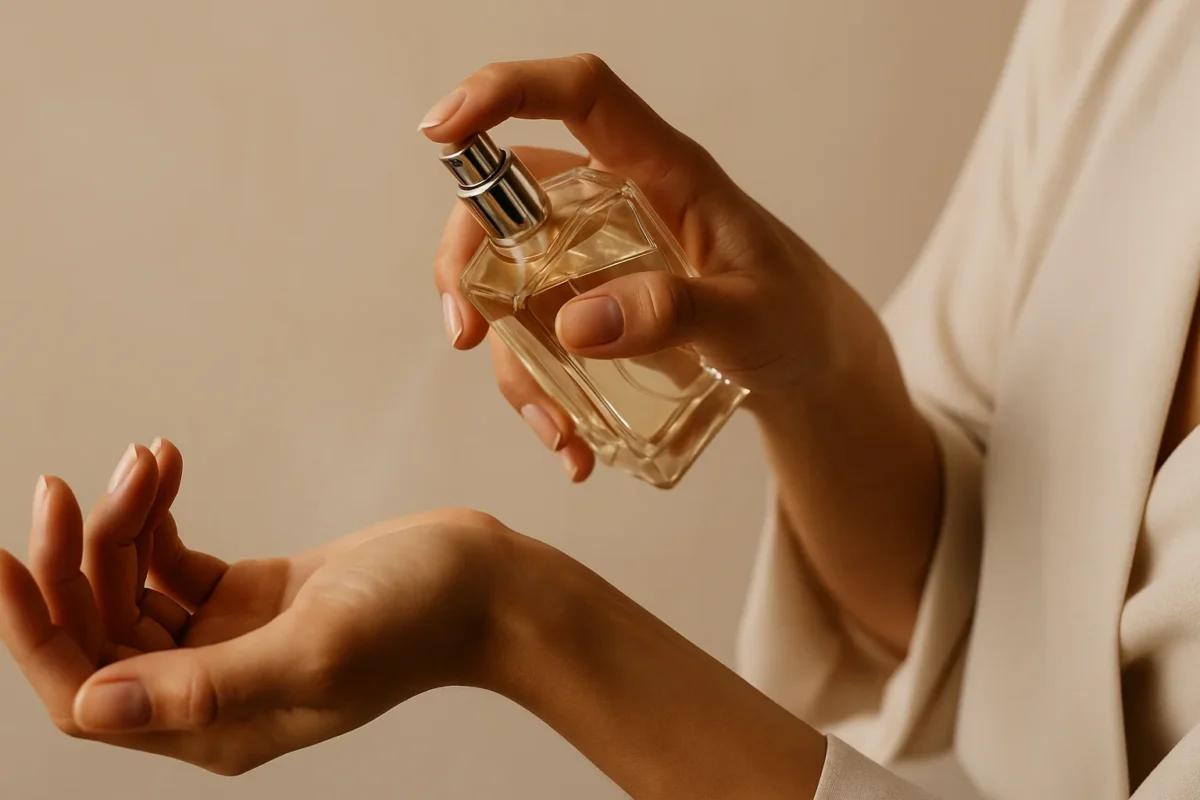
How to layer perfume the right way – which scents work together, where to apply, what order to follow, and how to make your layered scent last all day.
Most people wear one perfume and call it a day. It works, but it also means you smell exactly like thousands of other people who bought the same bottle. Perfume layering changes that. When you layer two or three scents together, the result is something no one else is wearing – because no one else combined those exact scents on that exact skin.
Learning how to layer perfume isn’t complicated once you understand a few basics: which scents complement each other, what order to apply them in, and where on your body they last longest. The rest is just experimenting until you find combinations you love.
Key Takeaways
- Perfume layering means wearing two or three scents together to create something personal. Start with a heavier base scent, finish with something lighter.
- Scents in the same family (floral + floral, woody + woody) blend smoothly. Scents from different families (citrus + woody) create more interesting contrast.
- Apply each scent to different pulse points so they develop separately and blend in the air around you, not on the same spot of skin.
- Moisturized skin holds perfume longer. Applying unscented lotion before your perfume can add hours to your scent.
- Two scents are enough. Three is the maximum before things start clashing.
Table of Contents
- What Is Perfume Layering?
- How to Layer Perfume Step by Step
- What Scents Go Well Together?
- Where to Apply Perfume When Layering
- How to Make Layered Perfume Last Longer
- Scent Combinations to Avoid
- FAQ
What Is Perfume Layering?
Perfume layering is wearing more than one scent at the same time. You apply one perfume as your base, then add a second (and sometimes third) scent on top of it or on a different part of your body. The scents mix on your skin and in the air around you, creating something that didn’t exist in either bottle.
This isn’t new. In the Middle East, fragrance layering has been a daily ritual for centuries – starting with scented oils, adding oud-based perfumes, and finishing with lighter sprays. What’s changed is that it’s now mainstream everywhere, partly because people got tired of smelling like everyone else and partly because social media turned perfume into a hobby rather than an afterthought.
What makes learning how to layer perfume worth the effort is the control it gives you. Instead of hoping one bottle captures your exact mood, you mix and adjust. Heavier base today because it’s cold. More citrus tomorrow because you feel like it. Your scent shifts with you instead of staying static.
How to Layer Perfume Step by Step
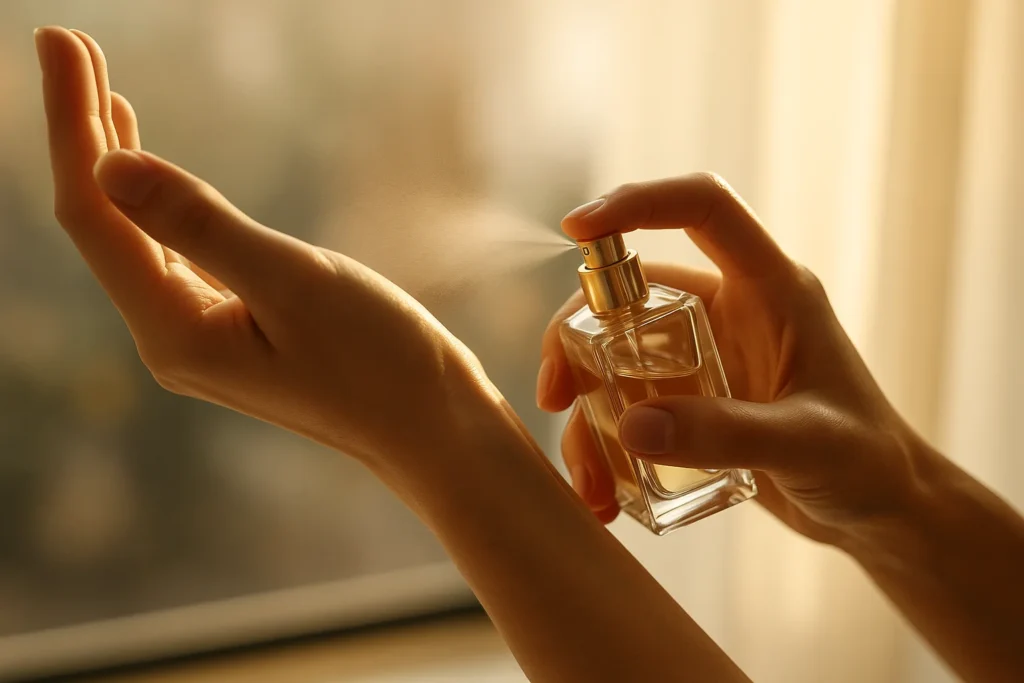
Even if you’re new to perfume layering for beginners, the process comes down to three decisions: what goes first, what goes second, and where each one goes.
Start with clean, moisturized skin. Perfume fades faster on dry skin because there’s nothing for the scent molecules to hold onto. After your shower, apply an unscented lotion or body oil. This gives the perfume a base to sit on and can extend wear time noticeably.
Apply the heavier scent first. Your base layer should be the richer, deeper fragrance – something with woody, amber, vanilla, or musk notes. These are the scents that linger longest, so they become your foundation. Spray or dab it on your pulse points and give it a minute to settle before adding the next layer.
Add the lighter scent second. Your top layer should be brighter and fresher – citrus, light florals, green notes, or aquatic scents. These fade faster, which means they’ll be your opening impression while the base scent carries through the rest of the day.
Use different pulse points for each scent. Don’t spray both perfumes on the same spot. Put your base on your wrists and neck, your top layer behind your ears and on your collarbone. This way each scent develops on its own and they blend naturally in the air around you rather than competing on the same patch of skin.
Wait before judging. Perfume layering doesn’t reveal itself immediately. Give your combination at least 30 minutes before deciding whether it works. The scents need time to settle, interact with your skin chemistry, and find their balance.
What Scents Go Well Together?
This is where most people get stuck. The combinations are endless, so having a framework helps. Here’s how to layer fragrance by scent family:
Pairings That Work
| Base Layer (Apply First) | Top Layer (Apply Second) | Result |
|---|---|---|
| Vanilla or amber | Citrus (bergamot, lemon) | Warm but fresh – works day and night |
| Sandalwood or cedar | Rose or jasmine | Woody-floral, elegant |
| Musk | Bergamot or green tea | Clean, modern, everyday |
| Oud or patchouli | Light florals (peony, lily) | Rich but not heavy |
| Coconut or almond | Citrus or tropical fruits | Warm-weather, relaxed |
How to Think About Combinations
Two approaches work well for scent layering:
Same family, different depth. Combine two florals or two woody scents at different intensities. A deep rose paired with a sheer peony, for example. This creates a layered, dimensional version of the same theme. Smooth and safe.
Different families, shared note. Combine a woody perfume and a citrus perfume that both contain bergamot. The shared note bridges the two scents and keeps them from clashing. More interesting than same-family layering, with a bit more risk.
The combinations above are starting points. Your skin chemistry changes how every perfume smells, so what works on someone else might not work on you. Test on your own skin and give it time.
Where to Apply Perfume When Layering
Where you spray matters as much as what you spray. Pulse points generate heat, which helps perfume project and develop throughout the day.
Best pulse points for perfume layering:
- Wrists – classic spot, easy to reapply, but don’t rub them together. Friction can break down the top notes
- Neck and throat – warm area, close to your face, people notice it in conversation
- Behind the ears – subtle and personal. Good for your lighter top layer
- Inner elbows – often overlooked but effective. The warmth from bending your arms diffuses the scent
- Collarbone – especially for lighter scents you want to catch on the breeze
- Behind the knees – if you’re wearing a skirt or dress, the scent rises throughout the day
The strategic approach: put your base layer (heavier scent) on lower body points like wrists and behind knees. Put your top layer (lighter scent) on upper body points like neck and collarbone. The heavier scent rises, the lighter scent greets. They meet somewhere in the middle and that’s your signature scent.
How to Make Layered Perfume Last Longer
Perfume layering already tends to last longer than wearing a single scent because you’re building layers that fade at different rates. But a few habits extend it further:
Moisturize before applying. This matters enough to repeat. Dry skin lets perfume evaporate quickly. A layer of unscented lotion gives scent molecules something to cling to.
Don’t rub your wrists together. A lot of people do this out of habit. Rubbing creates friction that can alter the lighter top notes, which are the first thing people smell. Let the perfume dry on its own.
Layer with matching products when possible. If your base perfume has a matching body lotion, shower gel, or hair mist, using those products creates additional scent layers without adding a separate perfume. Lotion first, perfume on top.
Spray your hair or scarf. Fabric and hair hold fragrance longer than skin. A light mist on your hair or the inside of a scarf gives you a scent trail that lasts well into the evening. Avoid spraying directly on delicate fabrics like silk.
Store your perfumes properly. Heat, sunlight, and humidity can degrade perfume oils over time. Keep bottles in a cool, dark place – not on your bathroom shelf where the shower steam reaches them.
Scent Combinations to Avoid
Not every pairing works. Some combinations create something unpleasant no matter how good each scent is on its own:
Two heavy base scents together. Oud plus amber plus vanilla is too much. One rich base is enough – the second scent should provide contrast, not more weight.
Clashing families. Sweet gourmand scents (caramel, chocolate, marshmallow) and fresh aquatic scents (ocean, rain, clean linen) tend to fight each other. They’re pulling in opposite directions and the result can smell confused.
More than three scents. Two is ideal for perfume layering. Three can work if one of them is very subtle (like a body lotion). Beyond three, the scents start competing and you lose the definition that makes layering interesting.
Strong scents at equal intensity. If both perfumes are powerful and project heavily, they’ll overwhelm everything. One should be louder, one should be quieter. Think lead singer and backup – not two people shouting.
FAQ About Perfume Layering
How do you layer perfume?
Start with clean, moisturized skin. Apply the heavier scent (woody, amber, vanilla) to your wrists and lower pulse points first. Then apply the lighter scent (citrus, floral, fresh) to your neck, collarbone, and behind your ears. Give it 30 minutes to settle before deciding if the combination works.
What perfumes go well together?
Scents that share at least one common note tend to blend well. Vanilla pairs with citrus, sandalwood pairs with florals, musk pairs with just about anything. Stay within the same family for safe combinations or mix families for more contrast. Either way, two scents are usually enough.
Does perfume layering make it last longer?
It can. When you layer perfume, the base scent lingers after the top scent fades, so you’re never left with nothing. Adding matching lotions or body oils underneath extends it further because moisturized skin holds scent longer than dry skin.
Can you layer perfume with lotion?
Yes, and it’s one of the easiest ways to start. Apply a scented or unscented body lotion first, then spray your perfume on top. If the lotion has a complementary scent, it adds another dimension to your fragrance without the risk of clashing.
How many perfumes should you layer?
Two tends to be the right number for most people learning how to layer perfume. Three can work if one layer is subtle (like a scented lotion). More than three tends to muddy the scent rather than enhance it.
Where should you apply layered perfume?
Pulse points – wrists, neck, behind the ears, inner elbows, collarbone, and behind the knees. For layering, apply different scents to different spots so each one develops individually before blending in the air around you.
Can men layer perfume too?
Perfume layering works the same regardless of gender. Woody bases with fresh or citrus top layers, leather with bergamot, musk with green tea – all combinations that work well. There’s no rule that limits scent layering to any gender.
What time of year is best for perfume layering?
Heavier combinations (vanilla, oud, amber bases) tend to suit cooler months when you want warmth and depth. Lighter combinations (citrus, aquatic, sheer florals) feel better in warmer weather. Perfume layering lets you adjust your scent with the seasons without buying entirely new fragrances.
Finding your combination takes some trial and patience. Start with two scents you already own, apply them to different pulse points, and see what happens. You might find something you like on the first try, or it might take a few experiments. Either way, once you figure out how to layer perfume in a way that works for you, wearing a single scent out of the bottle starts to feel like leaving the house half-dressed.
More Articles About Beauty
- Under Eye Patches: Do They Actually Work?
- Retinol Not Working? Here’s Why (And What to Do Instead)
- Best Fabrics for Sensitive Skin (And What to Avoid)
Disclaimer: This article is for informational purposes only.
Written by Pure as Beauty