
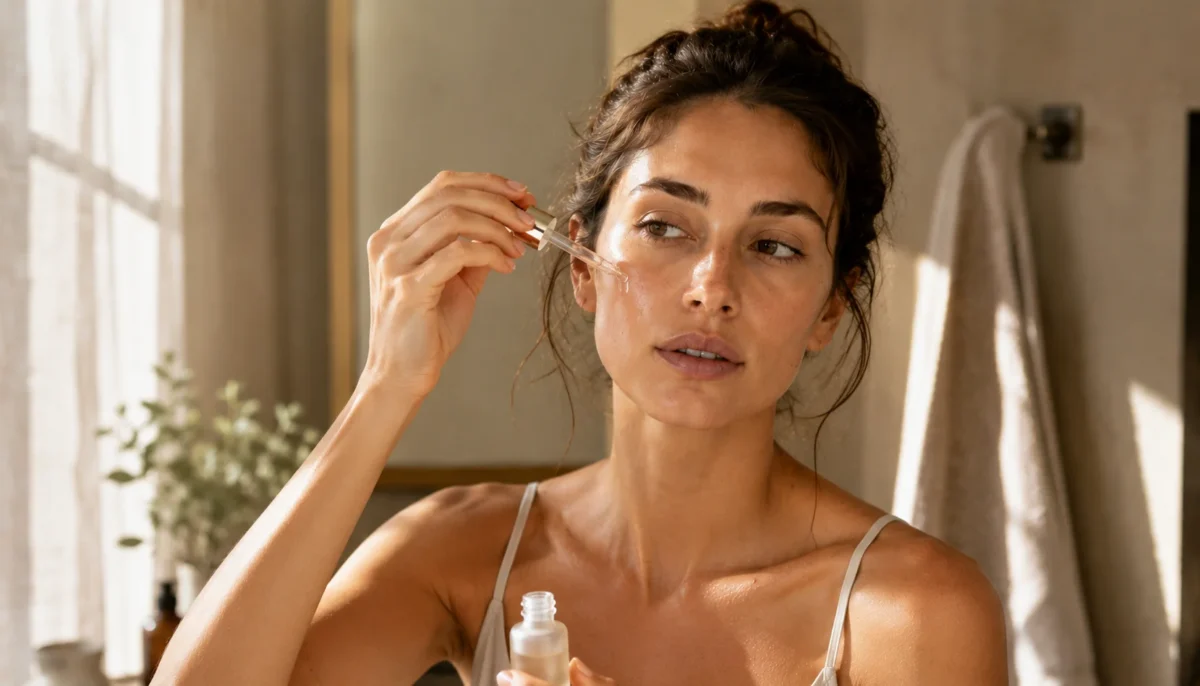
Retinol not working for your skin? Here’s why it might be making things worse, how to tell if it’s purging or breaking you out, and what to use instead.
Everyone says retinol is the one ingredient you need. The gold standard. The miracle worker. So you bought one, used it for weeks, maybe months – and your skin looks… the same. Or worse. More breakouts, more dryness, more redness. Not exactly the glow you were promised.
Retinol not working is way more common than anyone admits. Sometimes it’s the wrong product. Sometimes it’s how you’re using it. Sometimes your skin just doesn’t respond to it. None of those mean you’re doing something wrong – they mean you need a different approach.
Key Takeaways
- Retinol takes 8-12 weeks minimum to show results. If you quit before that, you didn’t give it enough time.
- Not all retinol products are the same. Concentration, formula, and delivery method all matter.
- Retinol purging and retinol breakouts are two different things – knowing which one you’re dealing with changes everything.
- Some skin types genuinely don’t tolerate retinol well. That’s not a failure, it’s biology.
- Alternatives like bakuchiol, retinal, and azelaic acid can give similar results without the irritation.
What Retinol Actually Does
Before figuring out why your retinol is not giving you results, it helps to know what it’s supposed to do in the first place.
Retinol is a form of vitamin A. When you apply it to your skin, it speeds up cell turnover – basically pushing old dead cells off the surface faster and bringing newer ones up. Over time, this can reduce fine lines, fade dark spots, clear acne, smooth texture, and make skin look more even overall.
It’s not the only retinoid out there. Retinol is the over-the-counter version – milder and slower. Retinal (retinaldehyde) is one step stronger. Tretinoin is prescription-strength and the most potent. They all belong to the same family but work at different speeds and intensities.
The thing is, retinol needs time to convert into its active form inside your skin before it does anything. That’s why results take weeks, not days. And that’s also why the wrong product, wrong concentration, or wrong routine can make retinol completely useless – or worse, damaging.
Why Retinol Isn’t Working for You
Retinol not working for you? It’s usually one of these reasons:
The most common one is timing. Retinol needs at least 8-12 weeks of consistent use before you see real changes. Most people give up around week 3 or 4, right when their skin is at its worst (purging phase). That’s the worst time to quit because your skin was about to turn the corner.
Then there’s the strength issue – and it goes both ways. Too weak, and nothing happens. Some products contain 0.01% retinol and call themselves “retinol serums.” At that concentration, you won’t see a thing. But too strong is just as bad. Jumping straight to 1% damages your moisture barrier and keeps your skin in a cycle of redness and peeling that never settles.
SPF is the other big one. Retinol makes your skin more sensitive to UV. If you’re using retinol at night but skipping sunscreen during the day, the sun is undoing every bit of progress. UV causes the exact damage retinol is trying to fix. Without SPF, retinol is working against itself.
A few more reasons people miss: mixing retinol with AHAs or benzoyl peroxide on the same night can deactivate it or cause irritation. Using vitamin C and retinol at the same time can increase sensitivity – better to use vitamin C in the morning and retinol at night. Starting retinol when your skin barrier is already damaged (red, tight, stinging) makes everything worse – you need to repair first. And retinol that’s stored in a clear jar exposed to light and air loses potency within weeks. If the product changed color, it’s already gone.
Retinol Purging vs Breakout: How to Tell the Difference
This is where most people panic and quit. Your skin gets worse after starting retinol, and you can’t tell if it’s working or destroying your face. If you’re thinking “retinol broke me out,” you might be right – or it might be purging. Here’s how to tell:
| Questions | Purging | Breakout |
|---|---|---|
| Where | Areas where you normally break out | New areas you don’t usually break out |
| What it looks like | Small bumps, whiteheads, minor pimples | Cysts, deep pimples, rash-like irritation |
| How long | 4-6 weeks then clears | Keeps going or gets worse |
| Skin texture | Improves underneath | Gets rougher overall |
| What to do | Keep going | Stop and reassess |
If your breakouts match the left column, you’re purging – your skin is pushing out what was already building up underneath. That’s the retinol working. If your breakouts match the right column, the product is irritating your skin and retinol not working is the reality, not just a feeling.
Signs Retinol Is Making Your Skin Worse
Some irritation when starting retinol is normal – mild dryness, slight peeling, a little sensitivity. That usually settles within the first month.
But retinol making your skin worse is different from retinol adjusting your skin. After 6 weeks, if the signs below describe your situation, it’s doing more harm than good:
- Redness that doesn’t go away between applications
- Burning or stinging when you apply other products (even moisturizer)
- Skin that feels tight and papery all the time
- Peeling that’s painful, not just cosmetic
- Breakouts that keep getting worse past the 6-week mark
- Skin that looks dull and dehydrated instead of glowing
If these describe your experience after 6+ weeks, the formula is wrong for you, the concentration is too high, or your skin doesn’t tolerate retinoids well.
There’s nothing wrong with stopping. Retinol is not the only option.
What to Use Instead of Retinol
If retinol isn’t for you after giving it a fair shot, these alternatives deliver similar results with less irritation:
Bakuchiol. The most popular retinol alternative right now, and for good reason. It’s plant-based, doesn’t cause photosensitivity, and research shows it can reduce wrinkles and improve skin texture similarly to retinol. Safe during pregnancy too, which retinol is not. The main difference: it works slower, so patience is even more important.
Retinal (retinaldehyde). If regular retinol is too weak but tretinoin is too harsh, retinal sits right in the middle. It’s stronger than retinol but gentler than prescription options. It also converts faster in the skin, so you may see results sooner. Worth trying if your issue was that retinol wasn’t strong enough.
Azelaic acid. Great for acne, rosacea, and hyperpigmentation. It doesn’t increase cell turnover the way retinol does, but it targets many of the same concerns through different pathways. Works well for sensitive skin and can be used morning and night.
Peptides. If your main concern is anti-aging rather than acne, peptides stimulate collagen production without any of the irritation. They won’t resurface your skin the way retinol does, but they strengthen and firm it over time. Easy to combine with other ingredients too.
Vitamin C (for the morning). Not a direct replacement, but if your goal is brightening and evening out skin tone, a good vitamin C serum in the morning can handle a lot of what you were hoping retinol would do at night.
How to Make Retinol Actually Work
If you want to give retinol another shot – or you’re starting for the first time – these steps help avoid the mistakes that make retinol not working so common:
Start low. If you’re in your 20s and using retinol for prevention, 0.1% is plenty. Your skin doesn’t need more than 0.25-0.3% at this age. In your 30s, starting around 0.1-0.25% and building up to 0.3-0.5% over months works well. For your 40s and beyond, 0.25% is still a safe starting point – and most people never need to go above 0.5%.
A study found that 0.3% retinol was just as effective as 1% for skin remodeling, with far fewer side effects. Higher doesn’t always mean better. Your skin decides what it can handle, not your age.
Go slow. Once a week for the first two weeks. Then twice a week for two weeks. Then every other night. Then nightly if your skin tolerates it. Rushing this is how you wreck your barrier.
Apply to dry skin. Damp skin absorbs retinol faster, which sounds good but actually increases irritation. Wait 10-15 minutes after washing your face before applying.
Buffer if needed. If your skin is sensitive, apply moisturizer first, then retinol on top. This slows absorption and reduces irritation without eliminating the benefits.
Always use SPF the next morning. Every single day. SPF 30 minimum, even when it’s cloudy. Skip this and you’re wasting the retinol.
Don’t mix with harsh actives. On retinol nights, skip AHAs, BHAs, and benzoyl peroxide. Save vitamin C for the morning. Keep retinol nights simple: cleanser, retinol, moisturizer, done.
Commit to 12 weeks. If after 12 consistent weeks of proper use you see no improvement and no irritation, the product is too weak. If you see constant irritation and no improvement, it’s not for you. Either way, 12 weeks gives you a real answer.
FAQ About Retinol
Why is retinol not working for me?
The most common reasons: you haven’t used it long enough (give it 12 weeks), your product is too weak or too strong, you’re skipping SPF, or you’re mixing it with ingredients that cancel it out. Check each one before giving up.
How long does retinol take to work?
Expect 8-12 weeks for visible changes in texture and tone. Fine lines and dark spots can take 3-6 months. If nothing changes after 12 weeks of consistent use, switch products or talk to a dermatologist.
Can retinol make your skin worse?
Yes. Too-high concentration, a damaged skin barrier, or using retinol with harsh actives can all cause ongoing irritation, breakouts, and damage. If your skin is getting worse past the 6-week mark, stop and reassess.
What’s the difference between retinol purging and breaking out?
Purging happens in areas where you normally break out and clears within 4-6 weeks. Breakouts from retinol happen in new areas and don’t improve. Purging means it’s working. Ongoing breakouts mean it’s not right for you.
What can I use instead of retinol?
Bakuchiol is the closest alternative with similar anti-aging benefits. Retinal is stronger than retinol but still over-the-counter. Azelaic acid works for acne and pigmentation. Peptides are great for anti-aging without irritation.
Should I stop using retinol if my skin is irritated?
Mild dryness and flaking in the first month is normal. But if you have persistent redness, burning, or breakouts after 6 weeks, stop. Repair your barrier with gentle products for a few weeks, then decide whether to try again at a lower concentration or switch to an alternative.
Is retinol bad for sensitive skin?
Retinol can work for sensitive skin, but you need to start very low (0.025% or lower), go very slow (once a week), and buffer with moisturizer. If your skin still reacts badly, bakuchiol is a better option.
How do I know if retinol is working?
Signs retinol is working: your skin feels smoother, looks more even, fine lines start softening, and breakouts decrease after the initial purging phase. You won’t see dramatic changes overnight – real results show up gradually between weeks 8-12.
Can I use retinol every night?
Eventually, yes – but not when you’re starting out. Build up gradually over 8-10 weeks. Some people’s skin never tolerates nightly use and does better with every-other-night application long term. That’s fine and still effective.
If retinol works for you, great. If it doesn’t, that doesn’t mean your skin is broken – it means you need a different tool. The goal is better skin, not retinol loyalty.
More Articles About Skincare
- Summer Skincare Routine: What to Change and Why
- Why Skin Feels Dry After Moisturizing (And How to Fix It Fast)
- How Often Should You Exfoliate? A Simple Guide for Every Skin Type
Disclaimer: This article is for informational purposes only and is not intended as dermatological or medical advice. If you have concerns about your skin, consult a dermatologist.
Written by Pure as Beauty