
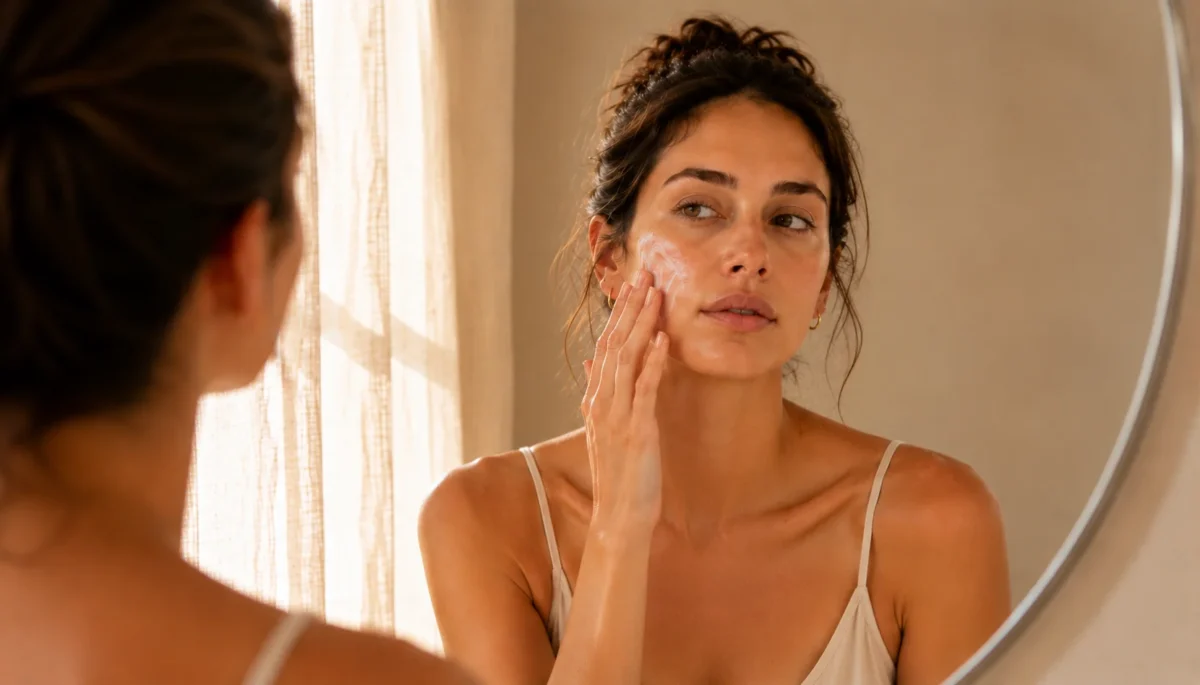
Switch your skincare routine for summer the right way. Simple tips for sunscreen, lightweight moisturizers, and keeping your skin clear in hot weather.
If your skin starts acting up the moment the weather gets warmer – more oil, more breakouts, makeup sliding off by noon – it’s probably not your products. It’s your routine. What worked in winter doesn’t always translate to summer, and most skin frustrations in hot weather come from not adjusting soon enough.
A good summer skincare routine doesn’t mean buying all new products. It means knowing what to swap, what to skip, and what suddenly becomes non-negotiable. Here’s how to build a summer skincare routine that actually works for your skin.
Key Takeaways
- Your skin produces more oil and sweat in summer, so lighter products work better than rich creams.
- Sunscreen is the single most important step – reapply every two hours if you’re outside.
- You don’t need to overhaul everything. Small swaps make a big difference.
- Retinol can still be used in summer, but with extra sun protection.
- Over-washing and over-exfoliating in summer often makes things worse, not better.
What Is a Summer Skincare Routine?
A summer skincare routine isn’t a completely new set of steps – it’s your existing routine adjusted for heat, humidity, and stronger UV. The core structure stays the same: cleanse, treat, moisturize, protect. What changes is the weight and texture of the products you’re using.
In winter, your skin loses moisture to cold dry air, so heavier creams and oils make sense. In summer, the opposite happens. Your skin produces more sebum, sweats more, and holds onto moisture differently. Products that felt comfortable in December can suddenly feel suffocating in July.
The whole idea behind a summer skincare routine is simple: keep your skin protected, hydrated, and clear without layering on more than it can handle in the heat. Your summer skincare essentials come down to a lightweight cleanser, a good sunscreen, and a moisturizer that doesn’t feel heavy – everything else is optional.
Most people overcomplicate this. You don’t need a summer-specific product for every step. You need to understand what your skin is doing differently and adjust accordingly.
How to Adjust Your Routine for Summer
Not everything needs to change. Here’s what to adjust and what to leave alone:
| Action | Winter Product | Summer Swap |
|---|---|---|
| Switch | Heavy cream moisturizer | Gel or water-based moisturizer |
| Switch | Cream cleanser | Gentle foaming or gel cleanser |
| Switch | Thick sunscreen | Lightweight, oil-free SPF |
| Keep | Vitamin C, niacinamide | Same – these work year-round |
| Keep | Cleanse, treat, moisturize, protect | Same structure, lighter products |
| Add | – | Daily SPF if you weren’t using it |
| Add | – | Hydrating serum if dropping heavy moisturizer |
| Skip | – | Heavy facial oils, thick overnight masks |
The biggest shift isn’t about buying new things – it’s about going lighter with what you already have or making one or two targeted swaps.
Your Summer Skincare Routine, Step by Step
Now that you know the summer skincare essentials and what to adjust, here’s how each step looks in practice. You don’t need all of these – pick what applies to your skin and skip the rest.
Cleanser: Go Lighter
If you’re using a cream or milk cleanser for winter, summer is a good time to switch to a gel or gentle foaming formula. Your skin is producing more oil and sweat, and a lighter cleanser handles that better without stripping.
One thing to watch out for – the temptation to wash your face three or four times a day because it feels oily. Twice a day is enough. Over-cleansing strips your natural barrier and actually triggers more oil production. If your face feels oily midday, a rinse with plain water or blotting papers work better than another full wash.
SPF: The Non-Negotiable
If there’s one step in your summer skincare routine that matters more than everything else combined, it’s sunscreen. UV exposure is the number one cause of premature aging, dark spots, and uneven texture – and it’s significantly stronger in summer. Even if you’re building the best skincare routine for hot humid weather, none of it matters without SPF.
A few things that actually make a difference with sunscreen:
Use SPF 30 or higher. SPF 30 blocks about 97% of UVB rays. Going higher helps but the difference gets smaller – SPF 50 blocks about 98%.
Reapply every two hours if you’re outdoors. A single morning application doesn’t last all day, no matter what the product claims.
Don’t skip cloudy days. Up to 80% of UV rays pass through clouds. Overcast doesn’t mean safe.
Apply enough. Most people use about half the amount they need. For your face alone, aim for about a nickel-sized amount.
If you find sunscreen too heavy or greasy for summer, look for gel-based or water-based formulas. There are plenty that feel like nothing on the skin. The best sunscreen is the one you’ll actually use every day.
Moisturizer: Less Is More
You still need moisturizer in summer – skipping it entirely can backfire. When your skin is dehydrated, it compensates by producing even more oil. But the type of moisturizer matters.
Switch from thick creams to gel-based or water-based moisturizers. These deliver hydration without the heavy feeling. Look for ingredients like hyaluronic acid, glycerin, or aloe – they pull water into the skin without adding weight.
If your skin is very oily in summer, you might be fine using just a hydrating serum under your sunscreen instead of a separate moisturizer. This keeps things light while still protecting your barrier.
Exfoliation: Gentle and Consistent
Summer skin can look dull if dead skin cells build up on the surface – sweat, sunscreen, and oil all contribute to that. Regular exfoliation helps, but the key word is gentle.
Over-exfoliating in summer is one of the most common mistakes. Your skin is already dealing with UV exposure and heat – adding aggressive scrubs or too-frequent acid treatments on top of that can irritate and sensitize it. Stick to 1-2 times a week with a mild AHA (like lactic acid) or a gentle enzyme exfoliant.
If you’re spending a lot of time in the sun, scale back even further. Freshly exfoliated skin is more sensitive to UV and burns more easily.
Vitamin C and Antioxidants
If you’re after that summer glow skincare look – bright, even, healthy skin without heavy makeup – antioxidants are what get you there. Summer is actually the best time to use vitamin C. UV exposure and pollution generate free radicals that damage skin cells, and antioxidants help neutralize them. Vitamin C in particular can help brighten sun-related dullness and support your sunscreen’s protection.
Apply vitamin C serum in the morning, before your moisturizer and sunscreen. It works alongside SPF – not as a replacement.
One thing to note: vitamin C can oxidize faster in heat and light. Store your serum in a cool, dark place – not on a windowsill or in a steamy bathroom.
What About Retinol?
There’s a common belief that you should stop retinol in summer. You don’t have to – but you do need to be more careful.
Retinol increases skin cell turnover, which can make your skin more sensitive to the sun. In summer, that sensitivity is amplified. If you want to keep using it:
Use it at night only. Apply sunscreen religiously the next morning. Start with a lower concentration if you’re new to it. If your skin feels irritated or you’re getting a lot of sun exposure (beach vacations, outdoor activities), it’s fine to pause and restart when you’re back to your normal routine.
Retinol and summer aren’t enemies – they just require extra awareness.
Summer Skincare Routine Mistakes That Make Things Worse
You’d think these would help in summer. They don’t:
- Washing your face too often. Feels refreshing but strips your barrier and triggers more oil. Twice a day is enough.
- Skipping moisturizer because your skin feels oily. Oily doesn’t mean hydrated. Your skin still needs moisture – just in a lighter form.
- Using harsh scrubs to “deep clean” sweaty skin. Summer skin is already stressed by UV and heat. Gentle exfoliation, not aggressive scrubbing.
- Only applying sunscreen once in the morning. It wears off. Reapply every two hours if you’re outside, or after swimming or sweating.
- Switching to all new products at once. If you change your entire routine overnight, you won’t know what’s working and what’s causing problems. Change one product at a time.
- Skipping skincare after the beach or pool. Saltwater and chlorine dry out your skin. Always cleanse and moisturize after.
How Summer Affects Different Skin Types
Your summer skincare routine should look a little different depending on your skin type. Not everyone reacts to summer the same way:
Oily skin tends to get oilier. The temptation is to strip it with harsh cleansers, but that usually backfires. A gentle gel cleanser twice a day, a lightweight moisturizer, and a mattifying sunscreen keep things balanced without over-drying.
Dry skin can actually improve in summer because of the humidity. But sun exposure and air conditioning can still dehydrate it. Keep a hydrating serum in your routine and don’t skip moisturizer just because it’s warm.
Combination skin often becomes more oily in the T-zone during summer. Treat different zones differently if needed – lighter products on the oily areas, a bit more moisture on the dry patches.
Sensitive skin needs extra care in summer. Heat, sweat, and sunscreen can all trigger irritation. Use fragrance-free products, mineral sunscreen, and avoid over-exfoliating. If your skin feels reactive, simplify your routine to the basics – cleanser, moisturizer, SPF.
A Summer Skincare Routine That Actually Works
You don’t need 10 steps. In summer, less is almost always better.
Morning:
- Gentle gel cleanser (or just lukewarm water if your skin feels fine)
- Vitamin C serum on slightly damp skin
- Lightweight moisturizer or hydrating serum
- Sunscreen SPF 30+ – wait a minute before makeup so it sets
Evening:
- Double cleanse – oil cleanser first to dissolve sunscreen, then gel cleanser
- Treatment – retinol, niacinamide, whatever you’re using
- Lightweight moisturizer
What you can skip: Toner, essence, face mist. Nice but not necessary. The goal isn’t a perfect routine on paper – it’s one you’ll actually do every day, even when it’s hot.
FAQ About Summer Skincare Routine
How should I change my skincare routine for summer?
The best summer skincare routine focuses on lighter products – gel cleansers, water-based moisturizers, lighter sunscreen. Keep your actives but adjust frequency if your skin feels sensitive. Add daily SPF if you weren’t using it.
Should I stop using retinol in summer?
You don’t have to, but use it at night and be extra diligent about sunscreen the next day. If you’re getting a lot of sun exposure, it’s fine to pause temporarily.
Why does my skin break out more in summer?
More oil production, sweat mixing with sunscreen and makeup, and clogged pores from heavier products. Switching to lighter, non-comedogenic products usually helps.
Is moisturizer necessary in summer?
Yes. Skipping it can make oily skin worse because your skin overcompensates. Use a lightweight, gel-based formula instead of a thick cream.
Can I use vitamin C in summer?
Yes – summer is actually ideal for vitamin C. It helps fight UV-related damage and brightens skin. Apply in the morning before sunscreen.
How often should I apply sunscreen in summer?
Every two hours if you’re outside. After swimming or sweating. Even on cloudy days.
Start with the swap that feels most needed – usually switching to a lighter moisturizer or finding a sunscreen you actually enjoy wearing. A simple summer skincare routine built around your skin type will always outperform a complicated one that doesn’t fit.
More Articles About Skincare
- Retinol for Beginners: The Ultimate Guide to Glowing Skin
- How Often Should You Exfoliate? A Simple Guide for Every Skin Type
- How to Prevent Dry Skin in Winter: 7 Simple Tips That Actually Work
- Why Skin Feels Dry After Moisturizing (And How to Fix It Fast)
Disclaimer: This article is for informational purposes only and is not intended as professional dermatological or medical advice.
Written by Pure as Beauty