
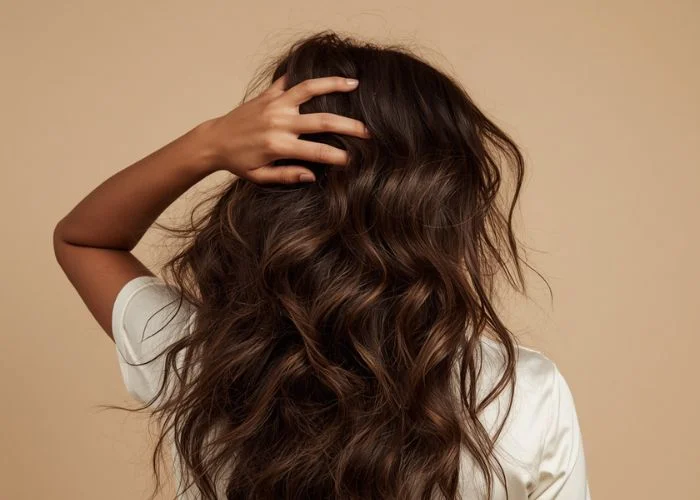
Build the best hair care routine by hair type. Simple steps for straight, wavy, curly, coily, fine, and thick hair – plus tips for oily scalp and dry ends.
Finding the right hair care routine by hair type can feel confusing – especially when what works for someone else makes your hair worse. A routine that gives curly hair bouncy, defined curls can make straight hair look flat and greasy. And what keeps fine hair voluminous will do nothing for thick, dry ends.
That’s why the starting point isn’t “what products should I buy?” – it’s “what does my hair actually need?”
Whether you’re building a hair care routine for beginners or rethinking what you’re already doing, this guide breaks down every hair type so you can find what actually works for yours.
Key Takeaways
- Your hair type determines how often you should wash, what products to use, and how to style – not trends or marketing.
- Straight and fine hair need lighter, volumizing products. Curly and coily hair need richer, more moisturizing formulas.
- The most common mistake is using one routine for all hair types – what works for one texture can work against another.
- Consistency matters more than complexity. A simple routine matched to your hair type will outperform a complicated one that doesn’t fit.
- Give it 4-6 weeks. If nothing improves, adjust one product at a time.
Table of Content
- Why Hair Type Matters
- How to Identify Your Hair Type
- Straight Hair Routine
- Wavy Hair Routine
- Curly Hair Routine
- Coily Hair Routine
- Fine, Thick & Combination Hair Routine
- Is Your Routine Working?
- FAQ
Why Building a Hair Care Routine by Hair Type Matters
It’s easy to get caught up in product recommendations – but even the best shampoo or conditioner won’t help if it’s not right for your hair type.
Hair type affects everything: how quickly your roots get oily, how easily your strands absorb moisture, how your hair holds a style, and how it reacts in humidity. When your routine actually fits your texture, you notice it – less frizz, more shine, fewer bad hair days.
When it doesn’t fit, you end up using products that don’t do what you need, or wondering why your hair never quite cooperates.
How to Identify Your Hair Type
The simplest way to find out is to wash your hair, skip all products, and let it air-dry. What you see is your natural texture.
Straight – lies flat from root to tip without any natural bend. Tends to get oily faster because sebum travels easily down the strand. Often looks shiny but can lack volume and body.
Wavy – has a loose S-shape, especially through the mid-lengths. Can look straight when wet and wavy when dry. Often oily at the roots and dry at the ends, making it one of the trickiest textures to manage.
Curly – forms defined spirals or ringlets. Naturally drier because oils have a harder time traveling down the curl pattern. More prone to frizz, and can look very different depending on humidity and how it dries.
Coily – tight curls or zigzag patterns. The most fragile hair type and needs the most moisture. Shrinkage is normal – coily hair can appear much shorter than it actually is when dry.
It also helps to consider your hair’s thickness (fine, medium, thick) and porosity – how easily it absorbs and holds moisture. A quick porosity test: drop a clean strand into a glass of water. If it floats, you likely have low porosity. If it sinks, high porosity. Somewhere in between means medium. This can help you choose the right product weight.
Hair Care Routine by Hair Type: Quick Comparison
| Hair Type | Wash Frequency | Shampoo Type | Conditioner Weight | Key Focus |
|---|---|---|---|---|
| Straight | Every 1-2 days | Lightweight, clarifying | Light, ends only | Volume and oil control |
| Wavy | Every 2-3 days | Sulfate-free, gentle | Medium weight | Wave definition and frizz |
| Curly | Every 3-4 days | Sulfate-free, moisturizing | Rich and creamy | Moisture and curl definition |
| Coily | Once a week | Creamy, sulfate-free | Thick and heavy | Deep hydration and protection |
The Best Hair Care Routine for Straight Hair
Straight hair tends to be the most low-maintenance – but it has its own challenges. It shows oil quickly, can look flat by the end of the day, and doesn’t always hold styles well.
Washing and Conditioning
Wash every 1-2 days with a lightweight or clarifying shampoo. Because sebum sits visibly on straight strands, more frequent cleansing usually helps. Condition only from the middle down – applying conditioner at the roots is one of the fastest ways to make straight hair look greasy.
Styling and Maintenance
For volume, blow-drying upside down or a volumizing mousse at the roots works well. Skip heavy oils and serums – a light mist or spray serum gives shine without weight. A clarifying wash once a week keeps buildup in check.
If your hair has more natural movement, the next section covers wavy hair – where the focus shifts from oil control to wave definition.
The Best Hair Care Routine for Wavy Hair
Wavy hair can be the most unpredictable texture. Some days it looks effortlessly tousled, other days it falls flat or frizzes out before lunch. The trick is working with the wave you already have – not fighting it or weighing it down.
Washing and Conditioning
Every 2-3 days with a gentle, sulfate-free shampoo. Washing too often strips the natural oils that actually help waves hold their shape. A medium-weight conditioner from the middle down works well – and leaving a tiny bit in after rinsing can boost definition without heaviness.
Styling and Maintenance
Scrunch with a curl cream or mousse while hair is still damp. One thing that makes a big difference with wavy hair – never brush it dry. It breaks up the wave pattern and creates puffiness. Use your fingers or a wide-tooth comb instead. For more definition, try plopping (wrapping damp hair in a cotton t-shirt) for 15-20 minutes. A hydrating mask once a week keeps waves looking soft.
The Best Hair Care Routine for Curly Hair
If your hair forms spirals or ringlets, moisture becomes the main priority. Curly hair is naturally drier, more prone to frizz, and can look completely different from one day to the next depending on humidity, products, and how it dries.
Washing and Conditioning
Every 3-4 days, or even less. Over-washing strips the natural oils curly hair really needs. Between washes, co-washing (conditioner only) can refresh curls without drying them out. A lot of people with curly hair notice their curls actually look better on day 2 or 3.
Use a rich, creamy conditioner and let it sit for a few minutes. Detangle with a gentle brush or your fingers while the conditioner is in – starting from the tips and working up. Some people skip rinsing entirely for extra hydration.
Styling and Maintenance
Apply leave-in conditioner and curl cream to soaking wet hair. The “praying hands” method or scrunching upward helps encourage formation. Air-dry or diffuse on low heat – and resist the urge to touch your curls while they dry.
A deep conditioning mask once a week makes a noticeable difference. For curls that feel limp, a monthly protein treatment can help bring back bounce.
For tighter curl patterns that need even more care, the next section covers coily hair.
The Best Hair Care Routine for Coily Hair
Coily hair has the tightest curl pattern and is the most fragile. It needs the most moisture, the gentlest handling, and a routine built around hydration and protection.
Washing and Conditioning
Once a week or every two weeks. Coily hair retains moisture better when it’s not washed too often. On wash day, take your time – rushing leads to tangles and breakage. Use a creamy, sulfate-free shampoo or cleansing conditioner. Lather at the scalp and let it run through the lengths.
For conditioning, apply generously and detangle with a wide-tooth comb from tips to roots. Let it sit for at least 5-10 minutes before rinsing.
Styling and Maintenance
The LOC method works well here: Liquid (water-based leave-in), Oil (jojoba or castor), Cream (styling butter). Protective styles like twists, braids, or buns minimize daily handling and reduce breakage. Between wash days, re-moisturize with a water-based spray.
A pre-poo treatment before shampooing protects strands. Follow with a deep conditioning mask for 20-30 minutes under a warm towel for best results.
Hair Care Routine by Hair Type for Fine, Thick, and Combination Hair
Not every hair concern fits neatly into a texture category. Here’s how to approach some of the most common situations:
Fine hair needs volume without weight. Stick with volumizing shampoo, light conditioner on ends only, and skip heavy oils. A dry shampoo at the roots between washes adds texture. The biggest mistake with fine hair is over-conditioning – it makes everything look flat and greasy.
Thick hair can feel dry, take forever to style, and expand in humidity. If you have thick curly hair, a simple hair care routine focused on moisture and definition works best. Use rich products – thick hair often needs double the amount you’d expect. A smoothing serum on the ends helps with frizz.
Oily scalp with dry ends is one of the most common frustrations, and something many people deal with when building a daily hair care routine for dry damaged ends. The solution is treating your hair as two zones – clarifying shampoo only at the roots, rich conditioner only from the middle down. Never apply conditioner to your scalp or harsh shampoo to your ends.
Simple Habits That Help Every Hair Type
- Use lukewarm water – hot water strips natural oils. A cool rinse at the end adds shine.
- Be gentle when wet – use a wide-tooth comb, never a regular brush on wet hair.
- Limit heat styling – always use a heat protectant and keep temps below 400F.
- Trim every 8-12 weeks – prevents split ends from traveling up the shaft.
- Sleep on silk or satin – less friction means less breakage and frizz.
How to Know If Your Hair Care Routine by Hair Type Is Working
Don’t expect overnight results. Hair routines take time – usually 4-6 weeks before you notice real changes. What to look for:
- Your hair feels easier to manage and style.
- Less frizz and fewer “off” days.
- Hair looks shinier and feels softer.
- Your scalp feels balanced – not too oily, not too dry.
- You stop reaching for extra products to “fix” things.
Sometimes the biggest sign is just that you stop thinking about your hair so much. It just works. If nothing’s changed after 4-6 weeks, switch one product at a time. Changing everything at once makes it impossible to figure out what’s actually helping.
FAQ About Hair Care Routine by Hair Type
How do I know my hair type?
Wash your hair, skip all products, and let it air-dry. Straight stays flat, wavy forms an S-shape, curly makes spirals, and coily has tight coils or zigzag patterns.
What is the 4-step hair care routine?
Cleanse, condition, protect, and style. Match each step to your texture – lighter products for straight and fine hair, richer formulas for curly and coily.
Can I use the same products as someone with a different hair type?
You can, but results will be very different. Curly hair products tend to be heavier, which can weigh down straight or fine hair. Choose products made for your texture.
What’s the most important step in any hair care routine?
Conditioner. Every hair type benefits from it – the difference is the weight. Light for straight and fine, rich and creamy for curly and coily.
How do I know if my hair is low or high porosity?
Drop a clean strand into a glass of water. Floats = low porosity. Sinks = high porosity. Middle = medium. This helps you pick the right product weight.
Is it better to wash hair with hot or cold water?
Lukewarm is best. Hot water strips natural oils. A cool rinse at the end closes the cuticle, adding shine and reducing frizz.
Start with the section that matches your hair type and build from there. Your hair already knows what it needs – the right routine just helps it get there.
More Articles About Beauty
- Why Hair Gets Frizzy in Humidity (Puffy or Flat Hair Explained)
- Clarifying Shampoo: Everything You Need To Know
- How to Prevent Dry Skin in Winter: 7 Simple Tips That Actually Work
- How Often Should You Exfoliate? A Simple Guide for Every Skin Type
Disclaimer: This article is for informational purposes only and is not intended as professional hair or medical advice.
Written by Pure as Beauty