
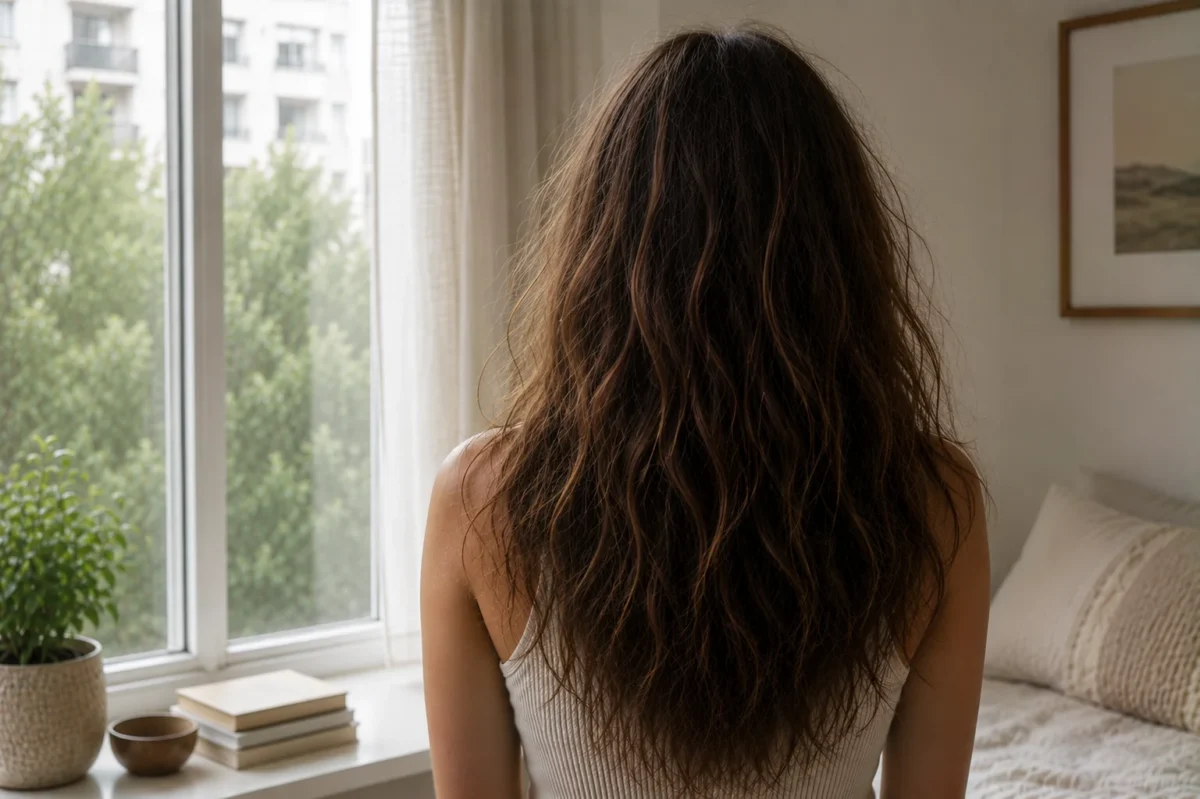
Why hair gets frizzy in humidity explained: why hair gets puffy, flat, or feels heavier—and why it changes so quickly outdoors.
Frizz in humidity often starts before it’s fully visible. Hair can still look smooth at a glance, but the surface begins to lose its uniform structure, which is why small sections lift first.
Humidity doesn’t just affect how hair looks. It changes how hair behaves throughout the day—how it holds its shape, how it feels at the roots, and how long it stays fresh.
Why Hair Gets Frizzy in Humidity
Why hair gets frizzy in humidity doesn’t always show up all at once. Hair can feel completely normal indoors, then start to change within minutes of stepping outside—small sections lift first, and the surface begins to lose its smoothness.
This shift comes from how hair reacts to moisture in the air. In humid conditions, strands begin to absorb that moisture, and the outer layer of the hair doesn’t stay as flat as it normally would. As a result, the surface starts to feel less controlled.
What makes frizz in humid weather harder to predict is that not every strand reacts the same way. Some parts of the hair take in more moisture than others, which creates slight differences in texture.
Frizz isn’t just about moisture — it’s about how consistently your hair can hold its shape when the environment changes. The more uneven that response is, the more visible the frizz becomes.
Hair doesn’t expand evenly because each strand has a slightly different structure. Areas where the cuticle is more raised or worn tend to absorb moisture faster, which creates small differences across the surface.
Humidity also affects how bonds inside the hair behave. As moisture enters, some of the temporary bonds that help hair keep its shape begin to shift, making the structure less stable. This is why hair can lose definition quickly — often within minutes of being outside.
Styling doesn’t fully prevent this either. Hair can hold its shape indoors, but once it’s exposed to humid air, that structure softens. The smoother the hair looks at the start, the more noticeable the change tends to be.
What you might notice when hair gets frizzy in humidity:
- the surface looks slightly less polished before frizz is fully visible
- smaller sections—especially around the top layers—change first
- parts of the hair lose definition while others stay the same
- the overall shape looks fuller, but less controlled
When hair gets frizzy in humidity, it isn’t always about damage or dryness—it’s often just hair reacting to the environment.
How Hair Changes Throughout the Day in Humidity
Humidity doesn’t affect hair all at once — it builds over time.
Hair that looks smooth in the morning can start to shift gradually throughout the day. The longer it stays exposed to humid air, the more noticeable the changes become.
A typical progression in humidity:
- morning → hair looks controlled, with minimal visible change
- mid-day → small sections start to shift, especially through the mid-lengths
- afternoon → volume becomes less balanced, with some areas expanding more than others
- evening → the overall shape feels softer and less defined
Hair doesn’t react to humidity all at once. What feels like a sudden shift is usually a series of small changes—starting in the most vulnerable areas, then spreading across the rest of the hair as the day goes on.
Why Hair Reacts More to Humidity on Some Days
Humidity doesn’t affect hair the same way every day. Some days, the change is barely noticeable. Other days, it feels immediate.
This difference usually comes down to a combination of small factors rather than just the weather itself.
Why hair can feel worse in humidity on some days:
- the air holds more moisture than usual
- your hair was already slightly uneven before going outside
- product buildup reacts differently in humid conditions
- changes earlier in the day continue to build over time
Even small differences in these factors can make hair react more strongly than expected.
Why Straight Hair Gets Puffy in Humidity
Straight hair doesn’t always turn frizzy in humidity—it often changes shape instead. Instead of staying compact, strands begin to spread outward, especially through the mid-lengths. It can feel like two different textures at once—flatter at the roots, wider through the mid-lengths, and less controlled at the ends.
This is why hair can look wider rather than fuller. The roots may stay relatively flat while the rest expands, creating an uneven silhouette.
When hair gets frizzy in humidity, straight hair often hides those early changes. Instead of looking rough, the shift shows up as puffiness—the texture is changing, but it appears as shape rather than visible frizz.
You might notice that the change doesn’t happen evenly. Mid-lengths tend to shift first, while the roots stay flatter for longer, which is what makes the overall shape feel unbalanced.
The effect is subtle at first, but becomes more noticeable as the day goes on, especially the longer hair stays exposed to humid air.
Common signs when hair gets puffy in humidity:
- mid-lengths begin to spread while the roots still look relatively flat
- hair appears wider before any obvious frizz shows up
- straight styles soften before they fully lose their shape
- the ends feel harder to control, even when the top still looks smooth
Why Hair Feels Heavy or Greasy in Humid Weather
Another change that comes with frizzy hair in humidity is how quickly hair stops feeling fresh. Even when it looks clean, the texture can begin to feel heavier and less airy as the day goes on.
This is often most noticeable at the roots, where heat from the scalp builds up. Instead of feeling light, hair can start to feel slightly coated—even without visible oil.
This shift doesn’t always happen immediately. Hair can feel normal in the morning, then gradually lose that fresh feeling by the afternoon as it stays exposed to humid air.
What it feels like when hair gets heavier in humidity:
- hair feels less airy earlier in the day, even when it still looks clean
- roots feel heavier while the rest of the hair hasn’t fully changed yet
- a slightly coated feeling appears before any visible oil
- styles lose movement before they lose their overall shape
Why Hair Reacts Differently Depending on Porosity
Not all hair absorbs moisture the same way. One of the biggest factors is porosity—how easily hair takes in and releases moisture.
High-porosity hair tends to react more quickly in humid conditions because moisture enters the hair more easily. This often makes changes in texture more noticeable and happen sooner. Low-porosity hair reacts more slowly, but it can still shift over time as exposure continues.
Porosity doesn’t just affect how fast hair changes—it affects how evenly it changes. Hair that absorbs moisture inconsistently is more likely to look uneven as the texture shifts.
How different hair types react in humidity:
- high-porosity hair reacts quickly, with visible changes in texture early on
- low-porosity hair changes more gradually, but still shifts over time
- treated or damaged hair reacts less predictably, with uneven texture changes
Why Hair Looks Different Indoors vs Outdoors in Humidity
Hair can look completely different depending on where you are, especially in humid conditions. It can feel controlled indoors, then shift quickly once you step outside.
Indoors, the air is usually more stable and less humid, which helps hair hold its shape. Outside, even a small increase in humidity can change how strands sit, separate, and move.
Lighting also plays a role. Natural light tends to reveal more texture, while indoor lighting can make hair appear smoother than it actually is.
The contrast isn’t just visual—it’s structural. Hair may feel the same at first, but the way it reacts to the environment changes how it looks over time.
Why the difference stands out:
- indoor air is typically drier and more controlled
- outdoor air introduces more moisture into the hair
- small temperature shifts affect how hair responds
- natural light reveals more texture than indoor lighting
Dry Heat vs Humid Heat: How Weather Changes Hair
Hair doesn’t react the same way in every type of heat. The difference between dry heat and humid conditions explains why the same routine can lead to completely different results.
In dry heat, there’s less moisture in the air, so hair tends to feel lighter but can become slightly rough or static. In humid conditions, the opposite happens—hair absorbs moisture from the air, which changes how strands sit and behave.
The key difference is how hair responds to moisture. Dry air pulls moisture away from the surface, while humid air pushes it in, which is why the texture shifts in completely different ways.
How hair reacts in dry vs humid conditions:
Dry heat:
- hair feels lighter but slightly rougher to the touch
- more static or flyaways appear
- strands stay more compact, with minimal expansion
Humid conditions:
- hair absorbs moisture from the air
- strands expand and lose definition
- texture becomes less consistent and harder to control
FAQ About Why Hair Gets Frizzy in Humidity
Why does hair get frizzy in humidity?
Hair gets frizzy in humidity because it reacts to moisture in the air. As hair absorbs that moisture, the surface becomes less smooth and strands stop sitting evenly together.
Why does straight hair get puffy instead of frizzy?
When hair gets frizzy in humidity, straight hair often hides that texture change. Instead of looking rough, it spreads outward, which makes it look wider or puffier.
Why does hair feel heavier in humid weather?
Hair can feel heavier in humid weather because moisture, scalp heat, and product buildup combine, making the roots feel less fresh even when the hair looks clean.
Why does hair look different outside compared to indoors?
Hair looks different outside because humidity levels change. Indoor air is usually drier, while outdoor air introduces more moisture, which affects how hair holds its shape.
Why does hair get worse later in the day in humidity?
When hair gets frizzy in humidity, the change often builds over time. Small shifts in texture and shape become more noticeable the longer hair is exposed to humid air.
Does porosity affect how hair reacts to humidity?
Yes. Hair with higher porosity absorbs moisture more quickly, so it tends to react faster and more noticeably in humid conditions.
Can freshly washed hair still get frizzy in humidity?
Yes. Even clean hair can get frizzy in humidity because it still reacts to moisture in the air as soon as it’s exposed to it.
Final Thought
Humidity can make hair feel unpredictable because the change is rarely just one thing. It can show up as frizz, puffiness, flatter roots, heavier texture, or a style that slowly loses its shape.
The important part is that it is not always a routine problem. Sometimes, the same hair and the same products behave differently because the air around them has changed.
More Articles About Beauty
- Clarifying Shampoo: Everything You Need To Know
- How to Prevent Dry Skin in Winter: 7 Simple Tips That Actually Work
- Why Your Skincare Routine Isn’t Working (And How It Actually Works)
- Dull Skin Causes: Why Your Skin Looks Tired and How It Changes Over Time
Disclaimer: This article is for informational purposes only and is not intended as professional hair or medical advice.
Written by Pure as Beauty