
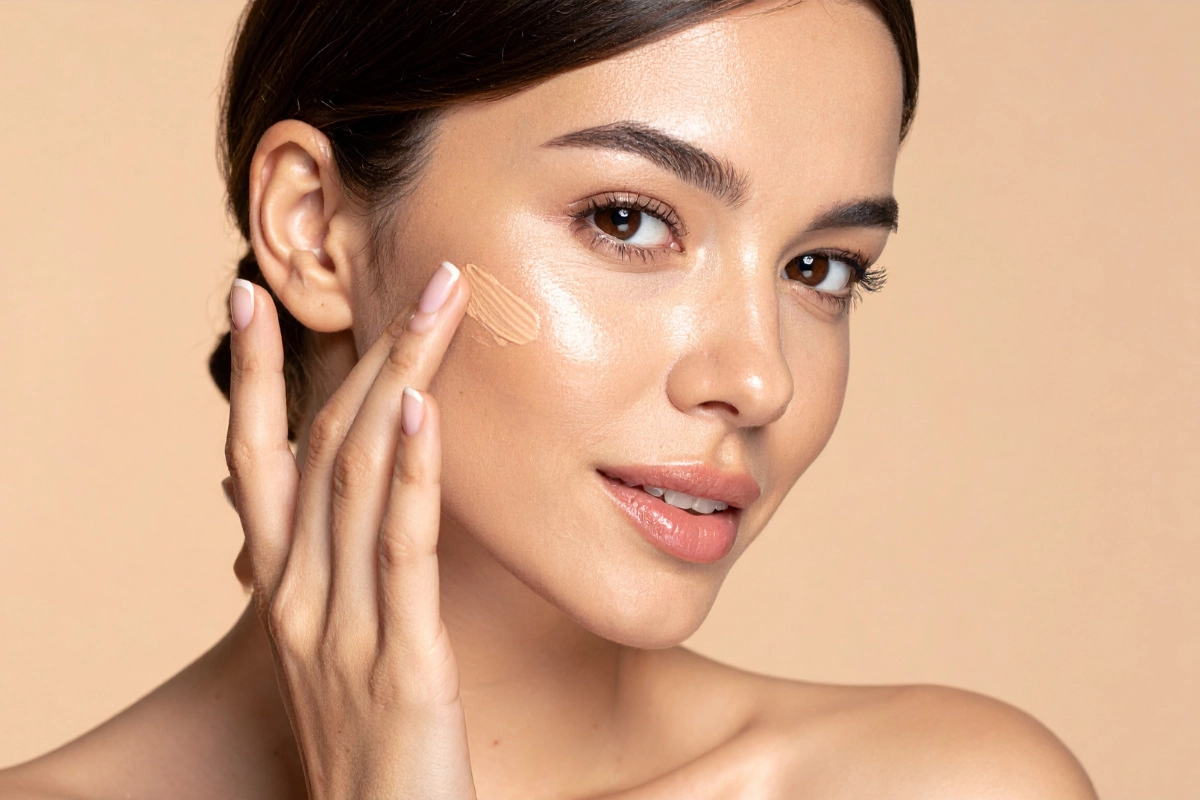
Not sure if your undertone is warm, cool, neutral or olive? Learn how to find your skin undertone with five easy at-home tests, plus foundation and makeup tips for each undertone.
Undertone is usually the reason a foundation looks right in the bottle and sits oddly once it is on. It is also why the same mustard jumper looks wonderful on one person and drains the colour out of another.
Short answer: Start with white versus cream fabric in natural daylight, then confirm your result with a foundation swatch along your jawline. Veins and jewellery can offer useful clues, but no single at-home test is definitive.
If you want to know how to find your skin undertone but you are not sure where to start, this guide should settle it. It should also help if you have run the tests before and ended up asking what is my skin undertone all over again.
Below, you’ll find five at-home tests explained step by step, along with guidance on how much weight to give each result. Read on for the differences between warm, cool, neutral and olive undertones, how undertone behaves at different skin depths, and how to choose foundation, blush and lipstick once you know which one you are.
Quick Undertone Test
| If your skin appears… | You may lean… |
|---|---|
| Pink, rosy or blue-toned | Cool |
| Golden, yellow or peach-toned | Warm |
| Balanced between warm and cool | Neutral |
| Green, grey-green or muted | Olive |
For a clearer result, compare pure white and cream fabric in natural daylight, then check foundation shades along your jawline. Veins and jewellery can add useful clues, but they are best used alongside other tests.
What Is a Skin Undertone?
Your undertone is the colour or temperature beneath the surface of your skin that influences how your complexion appears. It is relatively stable, although the way it looks can be affected by tanning, redness, circulation, hormones, age and lighting.
Skin undertone is often described as warm, cool, neutral or olive. Warm undertones tend to appear more golden, cool undertones more pink or blue, while neutral sits between the two. Olive undertones often have a green, grey-green or muted quality.
Skin Tone vs Skin Undertone
What Is The Difference Between Skin Tone and Skin Undertone? Skin tone and skin undertone get used as if they mean the same thing, but they describe two separate measurements.
| Skin tone | Undertone | |
|---|---|---|
| What it is | How light or deep your skin is | The colour quality beneath the surface |
| Does it change? | Can change with sun and season | Relatively stable |
| How you find it | Observe your overall skin depth | Compare colour and foundation shades |
| What it helps determine | Shade depth | Shade family |
The key point is that depth and undertone are separate. Fair skin is not automatically cool, and deep skin is not automatically warm. Getting the number right and the letter wrong is a common way to end up with a foundation that sits badly.
The jawline can provide a more useful reference for skin depth than the centre of the face, where redness, pigmentation or sun exposure may affect how the colour appears.
Different Types of Skin Undertones
In makeup, undertones are commonly described as warm, cool, neutral or olive. Olive can be especially tricky because it may lean warm, cool or neutral.
Cool — Cool undertones often have pink, red or blue qualities. The skin may appear more rosy or slightly flushed compared with warmer undertones. Pink- or red-based foundation shades may blend more naturally than strongly yellow or golden ones.
Warm — Warm undertones often have yellow, golden or peach qualities. The complexion may appear more golden or warm overall. Yellow-, golden- or peach-based foundation shades may blend more naturally than strongly pink or blue-based shades.
Neutral — Neutral undertones sit relatively evenly between warm and cool. The skin does not have a particularly strong pink, blue, yellow or golden cast. Both warmer and cooler shades may look reasonably natural, although one direction can still be more flattering than the other.
Neutral is also worth separating from an inconclusive result. If your tests give different answers, that does not automatically mean you are neutral. It may simply mean that the tests were difficult to read or that another undertone, particularly olive, is worth considering.
Olive — Olive undertones often have a subtle green, grey-green or muted quality. They can be difficult to identify because olive does not always fit neatly into a simple warm-versus-cool system. Olive skin may lean warmer, cooler or more neutral, which is why an olive foundation can sometimes match better than standard warm, cool or neutral shades.
This is also why olive should not be confused with simply having a yellow or golden undertone. Warm skin can look golden, while olive skin tends to have a more muted or green quality underneath.
How To Find Your Skin Undertone
For the clearest result, do these tests on bare skin in natural daylight, preferably near a window. No single undertone test is definitive, so look for patterns across several results.
1. The Vein Test
Turn your forearm over and look at the veins around your wrist.
- Blue or purple: likely cool
- Green: likely warm
- A mix of blue and green: possibly neutral
- Blue-green or teal: possibly olive
Veins can be difficult to read on very fair or deep skin, and their appearance can also vary with lighting and circulation.
2. The White and Cream Test
Hold pure white fabric next to your bare face, then compare it with cream or off-white. Focus on how each colour affects your complexion rather than which fabric you prefer.
- White makes your complexion look clearer: likely cool
- Cream makes your complexion look warmer or more balanced: likely warm
- Both look similarly flattering: possibly neutral
- Both look slightly harsh while muted colours make your skin look clearer: possibly olive
This test works well because you are comparing two colours directly rather than trying to identify your undertone from one feature.
3. The Jewellery Test
Hold gold jewellery against your skin, then compare it with silver in natural daylight.
- Silver looks more flattering: likely cool
- Gold looks more flattering: likely warm
- Both work well: possibly neutral
- Muted or brushed gold looks particularly flattering: possibly olive
Choose the metal that complements your complexion rather than the one you personally prefer. If the difference is difficult to see, the fabric and foundation tests can provide clearer clues.
4. Behind the Ear
Look at the skin behind your ear in natural daylight, or ask someone else to check it for you.
- Yellowish: may lean warm
- Pinkish: may lean cool
- Neither clearly: may lean neutral
It can be easier to read than the face when redness, pigmentation or makeup affects your complexion.
5. Your Skin’s Reaction to Sun
Think about how your skin usually responds to sun exposure. Burning easily or tanning readily can sometimes be associated with different undertones, but sun response is influenced by several factors and is not a reliable way to determine undertone on its own.
Sun response is therefore best treated as a supporting clue rather than a standalone test. Regardless of your undertone, daily SPF still matters.
Bonus: The Foundation Stripe Test
If you have a few foundations at home, you can test this directly on your skin to find your undertone.
What you need: two or three shades in your usual depth, each from a different undertone – warm, neutral and cool. An olive or neutral-olive shade helps too, if you happen to own one.
How it works: thin stripes along the jawline, each one carried slightly down onto the neck. They need ten to fifteen minutes to settle, and daylight to be read properly.
Reading the result: the shade that disappears into your skin without leaving a line is usually the closest match. If warm, cool and neutral all look slightly off while an olive shade settles more naturally, that can be a useful clue that you are olive.
One thing to watch: foundation oxidises as it dries and can shift warmer. That is why the ten minutes matter – a shade that looks right straight away can look too orange once it has settled.
Signs You Might Be Olive Instead of Neutral
Neutral is a genuine undertone, but mixed test results do not automatically mean you are neutral. If your results keep pointing to neutral but neutral foundations still look slightly wrong, olive may be worth considering.
You may have an olive undertone if:
- Warm foundations turn orange even when the depth is correct.
- Pink foundations look too rosy or slightly grey.
- Your skin has a subtle green, grey-green or muted cast.
- Standard neutral foundations still look slightly off despite having the right depth.
If several of these signs apply, compare olive or neutral-olive foundations at the same depth as warm, cool and neutral shades. The shade that blends most naturally into your jawline can help confirm the result.
Does Skin Tone Affect Your Undertone Test?
Skin tone and skin undertone are separate. Fair, light, medium and deep skin can all have warm, cool, neutral or olive undertones. Skin depth mainly affects how easy some undertone tests are to read.
- Fair skin: Veins may be easier to see, so the vein test can sometimes make cool undertones seem more likely than they are.
- Light to medium skin: Most undertone tests are relatively easy to compare, although lighting and surface redness can affect the result.
- Medium to tan skin: Olive undertones may be easier to notice, but olive can occur at any skin depth.
- Deep skin: Veins may be harder to see, so fabric comparison and foundation swatches can provide more useful clues.
Skin depth and undertone should be matched separately when choosing foundation. First look for shades that match your skin depth, then compare their undertones to find the closest match.
Choosing Makeup Products Based on Your Undertone
Once you know your undertone, use it as a guide for choosing complexion and makeup shades. For foundation, match your skin depth first, then your undertone.
Most complexion ranges use labels such as C, W or N, but shade systems vary between brands. A “warm” shade in one range can be more yellow, peach or golden than a “warm” shade in another.
Swatch two or three shades close to your expected depth along your jawline in natural daylight rather than testing dramatically different shades. The right shade should blend into the skin without leaving a visible line between your face and neck.
What Your Foundation Looks Like When the Undertone Is Wrong
Your foundation can also tell you when the undertone is off:
- Looks orange: may be too warm or too yellow
- Looks pink or overly rosy: may be too cool or too pink
- Looks grey or ashy: check both the depth and undertone before changing temperature
For blemishes, choose a concealer close to your foundation shade. For under-eyes, you can go slightly lighter if you want more brightness.
| Cool | Warm | Neutral | Olive | |
|---|---|---|---|---|
| Foundation | C shades, pink or red-based | W shades, yellow or golden | N shades | Olive or neutral-olive |
| Concealer | Neutral or pink | Peach or golden | Neutral | Neutral-olive; peach for under-eye darkness |
| Blush | Rose, mauve, berry | Peach, coral, apricot | Dusty rose, soft pink | Muted rose, terracotta |
| Bronzer | Cool or neutral brown | Golden or warm brown | Neutral brown | Olive-brown, muted brown |
| Lipstick | Blue-red, pink, berry | Coral, brick, warm red | Nude pink, soft plum | Brick, muted red, warm nude |
| Eyeshadow | Taupe, silver, cool jewel tones | Gold, copper, bronze | Both warm and cool tones | Olive, bronze, muted brown |
| Highlighter | Pearl, icy tones | Champagne, gold | Pearl or champagne | Soft gold, muted champagne |
Common Mistakes About Finding Your Skin Undertone
Reading depth as temperature. Assuming that fair skin must be cool, or that deep skin must be warm, is one of the easiest mistakes to make and one of the most common. How light or deep your skin is tells you nothing about the temperature underneath it.
Testing under a lamp. Indoor lighting shifts colour more than you would think – warm bulbs add a yellow cast and fluorescents can add green or blue – so anything you work out under artificial light is hard to rely on.
Testing on your hands. Hands get much more sun exposure than faces do, so their colour often sits a shade or two away from your face. Whatever you find there, confirm it at the jawline before you commit.
Testing with product on. Anything with colour in it will skew what you see, and tinted moisturiser and self-tan are easy ones to forget. A clean face gives you the truest read.
Trusting a single test. Any one result on its own can point the wrong way, which is why it helps to run a few and see where they agree.
Frequently Asked Questions About Skin Undertone
1. What is the easiest way to find your undertone?
The easiest approach is to compare pure white and cream fabric in natural daylight, then confirm the result with a foundation test along your jawline. If white makes your skin look clearer and cream makes it look pinker or duller, you may lean cool; if cream is more flattering, you may lean warm. If both look similar, neutral is possible. If standard warm, cool and neutral shades all seem slightly wrong, consider olive.
2. How do I know if I’m olive?
Olive skin often has a subtle green, grey-green or muted cast and can be difficult to match with standard warm, cool or neutral foundations. Warm foundations may turn orange, while pink-based shades can look too rosy or slightly grey. If both gold and silver work and your skin looks better in muted colours than highly yellow or pink ones, olive is worth testing.
3. How do I tell olive from neutral skin?
Olive and neutral skin can both suit a range of colours, but olive usually has a noticeable green or grey-green cast that neutral skin does not. If neutral foundations repeatedly look slightly orange, pink or grey despite having the right depth, try an olive or neutral-olive shade and compare it along your jawline.
4. Should foundation match my face or neck?
Your foundation should blend seamlessly from your face into your neck, so the jawline is the best place to test it. The centre of the face can be darker or redder because of sun exposure, pigmentation or natural redness. A shade that disappears at the jawline and does not leave a visible line is usually a better match.
5. Can olive skin be warm, cool or neutral?
Yes. Olive skin can lean warm, cool or neutral. Olive describes the green or muted quality of the undertone rather than placing the skin entirely on the warm-to-cool spectrum. Terms such as warm olive, cool olive and neutral olive are also commonly used.
6. Can my undertone change over time?
Your undertone is relatively stable, but the way it appears can change. Tanning, redness, circulation, hormones, age and lighting can all affect how your skin colour looks at a particular time. Your surface tone can therefore change without necessarily changing your underlying undertone.
7. What if I prefer colours my undertone says to avoid?
Wear them. Undertone is a guide to which colours are likely to complement your complexion, not a list of rules. Makeup, clothing and jewellery are also about personal style, and a colour that is theoretically outside your best palette can still look excellent when you like the way you feel wearing it.
More Articles About Makeup
- 10 Best Foundations for Oily Skin
- Quiet Luxury Makeup: The Elegant Beauty Trend
- Sweat-Proof Makeup: How to Make Your Look Last All Summer
Disclaimer: This guide is intended for general beauty and makeup guidance. Skin undertone can be difficult to assess because lighting, skin depth, redness and product formulas can affect how colours appear. Use the tests as practical starting points and choose the shades that look and feel right on your skin.
Written by Pure as Beauty