
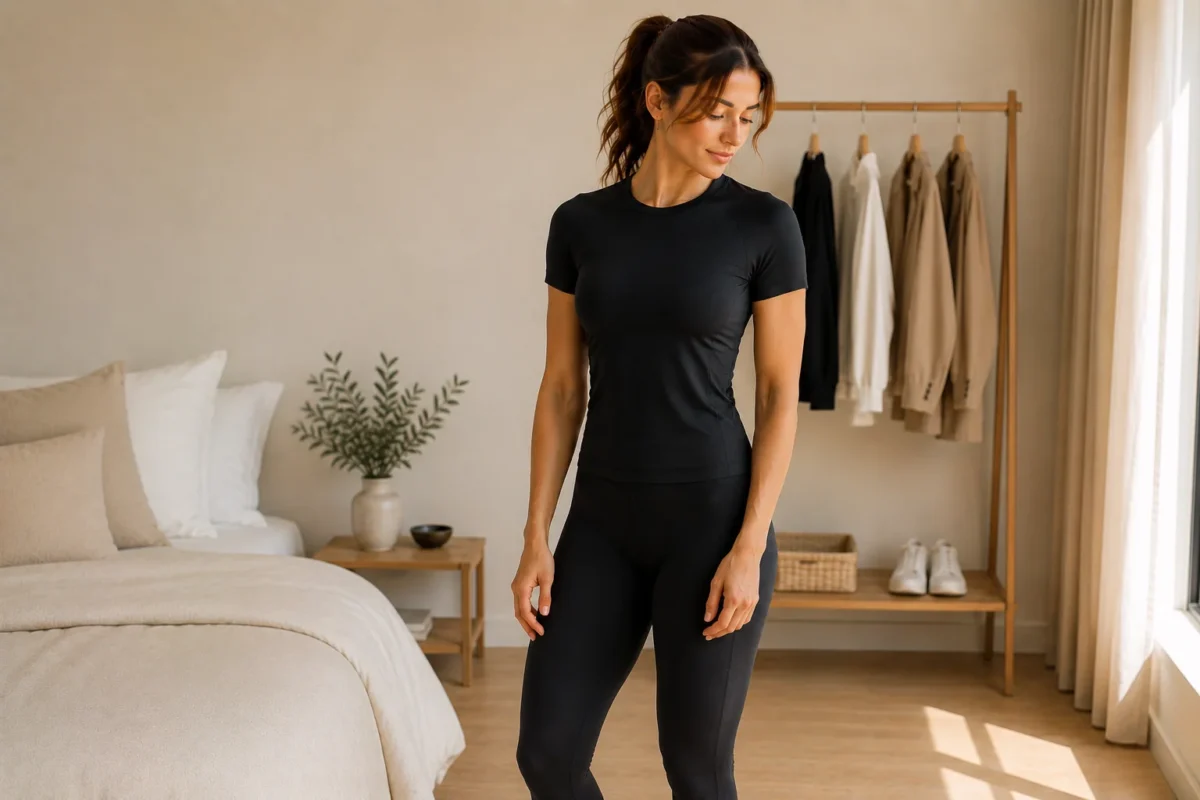
How to style activewear for everyday life – outfit formulas, layering tricks, capsule wardrobe basics, and mistakes to avoid so your leggings and joggers look polished beyond the gym.
Most of us wear activewear way more than we wear “real” clothes at this point. Leggings to the grocery store, joggers to coffee, a hoodie to basically everywhere. That shift happened years ago and it’s not going anywhere.
You’ve probably noticed it on other people too. Someone walks into a coffee shop in leggings and a hoodie and looks put together. Someone else walks in wearing almost the same thing and it just looks… unfinished. The clothes are similar. The difference is usually a jacket, a shoe choice, or the fact that the colors match.
If you’ve ever wondered how to style activewear so it reads as an actual outfit, it’s simpler than you’d think.
Key Takeaways
- Fit and color do most of the work. Well-fitting activewear in neutral tones already looks intentional – no styling tricks needed.
- Throw a blazer or jacket over any activewear set and it stops looking like gym clothes. One layer, huge difference.
- Matching your top and bottom in the same color reads as “planned outfit,” not “whatever was clean.”
- Shoes matter more than you’d expect. White sneakers for daytime, loafers or boots when you want to dress it up.
- You can build an athleisure capsule wardrobe with 8-10 pieces and cover almost every casual situation in your week.
Table of Contents
- Activewear vs Athleisure
- How to Style Activewear
- Athleisure Outfit Ideas by Occasion
- How to Build an Athleisure Capsule Wardrobe
- What to Layer Over Activewear
- What Not to Wear with Activewear
- FAQ
What’s the Difference Between Activewear and Athleisure?
People use these words interchangeably but they’re not the same thing:
| Activewear | Athleisure | |
|---|---|---|
| Designed for | Exercise, performance | Everyday life |
| Features | Moisture-wicking, compression, support | Comfort, versatility, style |
| Fabric | Performance polyester, spandex | Cotton blends, bamboo, modal, TENCEL |
| Styling | Functional, gym-ready | Layered, accessorized, polished |
| When to wear | Gym, run, yoga, workout | Errands, coffee, travel, casual days |
Activewear is what you work out in. Athleisure is what happens when you take those same pieces and style them for real life. The clothing can be identical – the difference is how you wear it.
Understanding this distinction matters when you’re figuring out how to style activewear because it changes what you reach for. Your compression leggings with a reflective stripe down the side are great for a night run. For brunch, a pair of thick, opaque leggings in a solid dark color does the job better.
How to Style Activewear So It Looks Intentional
You don’t need to do much. Most of the time, the gap between “she looks great in that” and “did she sleep in those” is five small decisions that take about thirty seconds total:
Stick to a color story. All-black activewear instantly reads as more polished than a mix of random colors and logos. Beyond black, navy, olive, charcoal, and beige all work well for an activewear street style look. Keep the palette tight – two or three colors maximum. Matching sets where the top and bottom are the same shade look particularly put together.
Add one structured piece. This tends to make the biggest difference when learning how to style activewear – or how to style athleisure in general. A tailored blazer over a tank top and leggings doesn’t look sporty – it looks intentional. A long wool coat over joggers does the same. Something structured on top, something soft underneath. That contrast is what makes it work.
Play with proportions. Fitted bottom + oversized top works. Fitted top + relaxed joggers works. Fitted everything head to toe can feel too athletic. Oversized everything can look shapeless. Mixing tight and loose creates balance.
Upgrade your footwear. Shoes tend to set the tone for the whole outfit. Clean white sneakers are the safest everyday option. Swap them for loafers, mules, or ankle boots and the same leggings suddenly feel like trousers. Worn-out running shoes or plastic slides work against everything else you’ve put together.
Let accessories finish the look. A structured bag instead of a gym backpack. Simple jewelry – small hoops, a thin chain, minimal rings. Sunglasses or a clean baseball cap. You don’t need much. One or two pieces and the outfit goes from “I’m wearing activewear” to “I got dressed today.” This is how to wear activewear casually without it looking unfinished.
Athleisure Outfit Ideas by Occasion
What works for Saturday morning errands won’t work at dinner. Here’s how to style activewear for the situations that actually come up during the week:
Running errands: High-waisted leggings, a fitted tank or cropped hoodie, clean sneakers, crossbody bag. This is the most common gym to street outfit and the foundation of everyday athleisure outfits. Keep it simple, keep it fitted, keep the colors neutral.
Coffee or brunch: Matching set (joggers + crewneck or leggings + oversized knit), ankle boots or clean sneakers, structured bag, jewelry. The matching set does most of the work. One accessory – earrings, a watch, a good bag – is enough to pull it together.
Working from home (video calls): Joggers on the bottom, a structured top like a quarter-zip or fitted long-sleeve on top. Nobody sees your bottom half, but dressing from the waist up in something with a collar or structure makes a difference on camera.
Traveling: Joggers or leggings, a layering system (tank + hoodie + light jacket), slip-on sneakers, tote bag. You want to be comfortable but not look rumpled when you land. Dark colors hide wrinkles and stains better than light ones.
Casual evening out: Black leggings, a silk or satin cami, a leather or suede jacket, pointed boots or mules, minimal gold jewelry. This pushes athleisure into evening territory without overdoing it. The footwear and the top set the tone – dressier pieces on top, comfortable base underneath.
Weekend walk or park: Joggers, oversized hoodie, trainers, baseball cap. As casual as it gets. Even here, keeping colors cohesive and choosing fitted joggers over baggy sweatpants makes a noticeable difference.
How to Build an Athleisure Capsule Wardrobe
You don’t need a closet full of activewear to style it well. A small athleisure capsule wardrobe of 8-10 core pieces covers most everyday situations:
Bottoms (3 pieces):
- One pair of black high-waisted leggings (thick, opaque, no logos)
- One pair of joggers in a neutral color (navy, olive, or charcoal)
- One pair of bike shorts for warmer weather
Tops (3 pieces):
- One fitted tank or cropped tee
- One oversized crewneck sweatshirt
- One quarter-zip or half-zip pullover
Layers (2 pieces):
- One structured jacket (blazer, denim jacket, or leather jacket)
- One lightweight hoodie or zip-up
Shoes (2 pairs):
- Clean white sneakers
- One pair of loafers, mules, or ankle boots for dressing up
Everything on this list mixes and matches with everything else. That gives you dozens of athleisure outfits from 10 pieces. Keep all the colors in the same family – neutrals, earth tones, or monochrome black – and most combinations work together. That’s how to style athleisure without overthinking every outfit.
If you’re looking for even more ways to style your leggings beyond activewear, we have a complete guide to what to wear with leggings coming soon.
What to Layer Over Activewear (And What Works Best)
If there’s one thing worth remembering about how to style activewear – layering is it. A pair of leggings and a tank look like gym clothes. Add a blazer and suddenly it’s an activewear street style look that works for lunch, meetings, or a night out.
What works as a layer:
| Layer | Vibe | Best With |
|---|---|---|
| Tailored blazer | Polished, smart-casual | Leggings + fitted top |
| Denim jacket | Relaxed, weekend | Tank top + joggers |
| Leather/suede jacket | Edgy, evening-ready | All black set |
| Long wool coat | Elevated, chic | Monochrome set |
| Oversized flannel/shirt | Casual, streetwear | Bike shorts or leggings |
| Puffer jacket | Sporty, winter | Anything |
| Trench coat | Classic, sophisticated | Neutral tones set |
Soft activewear underneath, something with structure on top. That contrast is what makes it work.
By season:
Summer – a linen button-up worn open over a sports bra or tank. Barely a layer but it changes the whole outfit.
Fall/Spring – denim jacket or a light trench over a matching set. This is where athleisure outfits look their best because you have just enough layers to play with.
Winter – puffer or wool coat, thermal base layer underneath, joggers. A beanie or scarf and it looks like a real winter outfit, not gym clothes with a coat on top.
What Not to Wear with Activewear
Some things consistently make activewear look worse no matter how good the pieces are:
Wearing pieces that don’t fit. Oversized hoodies are one thing. But when leggings sag at the knees and your tank top hangs off your shoulders, it stops looking intentional. Fit matters more with activewear than with regular clothes because there’s less structure to work with.
Logos everywhere. One logo is fine. A branded matching set can look great. But a Nike cap, Adidas jacket, Lululemon leggings, and Puma shoes together reads like a walking billboard. Pick one brand per outfit or go logo-free for the most polished look.
Worn-out pieces. Pilled leggings, stretched-out waistbands, faded hoodies with cracked prints – these undermine any gym to street outfit. Activewear looking polished depends on the pieces appearing fresh.
Ignoring context. Full activewear is fine for brunch. It’s less appropriate for a work meeting, even a casual one. Reading the room matters. If you’re unsure, a structured layer gives you room to adjust – take the blazer off and you’re casual, keep it on and you’re presentable.
Wrong bag. A gym duffel or backpack with a polished athleisure outfit doesn’t match. Swap it for a crossbody, belt bag, or structured tote. Small change, big difference in how the whole outfit reads.
Best Fabrics for All-Day Activewear
There’s a difference between wearing activewear for a one-hour workout and wearing it from morning to night. Polyester-heavy pieces that work fine at the gym can start feeling sticky, hot, or itchy after a few hours of sitting in a cafe or running errands. For a full day of errands and coffee, cotton-based joggers, bamboo-blend leggings, or TENCEL activewear tend to feel better against skin while breathing more.
Pay attention to seams too. Activewear designed for high-intensity workouts often has reinforced seams that can rub during hours of sitting. Flatlock seams or bonded seams feel smoother for all-day wear.
If you have sensitive skin, check out our guide to the best fabrics for sensitive skin for a deeper look at which materials work and which to skip.
FAQ About How to Style Activewear
How do you style activewear for everyday?
Start with well-fitting basics in neutral colors, add one structured layer like a blazer or jacket, upgrade your shoes from running sneakers to clean white sneakers or loafers, and carry a structured bag instead of a gym bag. These changes make athleisure outfits look intentional.
What is athleisure style?
Athleisure is activewear styled for life beyond the gym. It takes leggings, joggers, hoodies, and sports bras and pairs them with everyday pieces like jackets, jewelry, and proper shoes to create outfits that are comfortable but polished enough for errands, coffee, travel, or casual dinners.
How do you make athleisure look expensive?
Stick to a monochrome or tonal palette, choose pieces without visible logos, invest in good footwear, and add simple jewelry. Fabric quality also matters – Pima cotton, modal, and TENCEL drape better and look more refined than basic polyester.
Can you wear activewear to work?
It depends on your workplace. For remote work and casual offices, joggers with a structured top can work. For more formal settings, it’s harder to pull off. When in doubt, keep activewear below the waist and wear something polished on top.
How do you build an athleisure capsule wardrobe?
Start with 3 bottoms (black leggings, neutral joggers, bike shorts), 3 tops (fitted tank, oversized crewneck, quarter-zip), 2 layers (structured jacket and hoodie), and 2 pairs of shoes (white sneakers and loafers or boots). Keep everything in the same color family so pieces mix and match.
Is it okay to wear activewear every day?
From a style perspective, yes – as long as the pieces fit well and look intentional. From a skin perspective, choose fabrics that breathe. Polyester worn all day can trap sweat and cause irritation. Cotton blends and bamboo-based activewear tend to feel better for extended wear.
What shoes go with athleisure outfits?
White sneakers are the most versatile option. Loafers and mules dress it up. Ankle boots work for evening. Chunky trainers add a streetwear edge. Avoid worn-out running shoes or plastic slides for everyday styling.
How do you accessorize activewear?
Keep it minimal. A crossbody bag or belt bag, simple jewelry (small hoops, thin chain), clean sunglasses, or a baseball cap. One or two accessories are enough. You want it to look considered, not overdone.
Knowing how to style activewear doesn’t require a fashion degree. Fit, color, one good layer, decent shoes. Most days that’s all it takes to look like you planned the outfit. Even on the mornings you definitely didn’t.
More Articles About Fashion
- 10 Best Activewear Outfit Ideas for a Stylish Week
- How Clothes Affect Your Mood and Confidence
- Best Fabrics for Sensitive Skin (And What to Avoid)
Disclaimer: This article is for informational purposes only.
Written by Pure as Beauty