
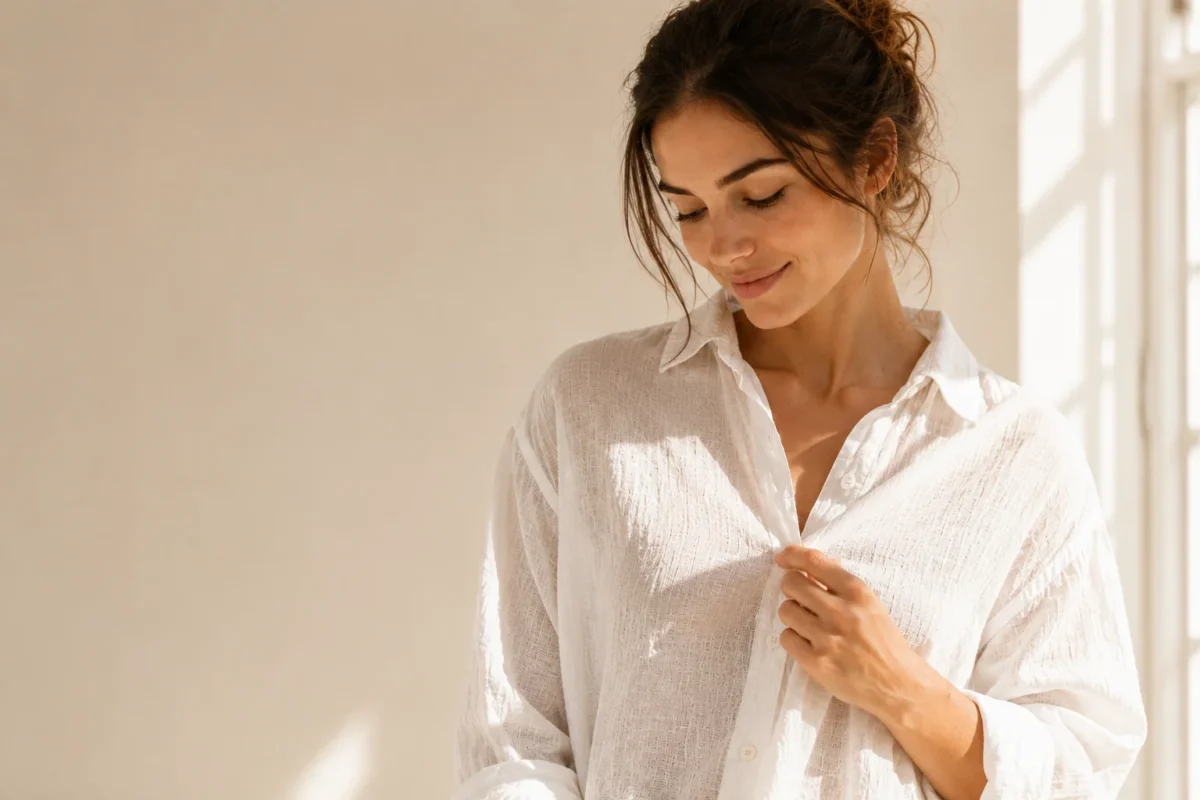
Looking for the best fabrics for sensitive skin? Here’s which fabrics feel good, which ones to skip, and how to shop for clothes that won’t irritate your skin.
You take care of your skin. You use gentle cleansers, avoid harsh ingredients, apply SPF every morning. But then you get dressed – and your clothing undoes half the work.
Most people never think about what their clothes are made of. But if your skin gets itchy, red, or irritated for no obvious reason, your fabric might be the problem. Choosing the right fabrics for sensitive skin matters because your clothing touches more of your body than any skincare product, and it sits there for hours. The wrong material can trap heat, create friction, or release chemicals that your skin reacts to – even if you’ve never had a diagnosed skin condition.
Key Takeaways
- Cotton, linen, silk, and bamboo are the gentlest fabrics for sensitive skin. They breathe, they don’t trap heat, and they cause minimal friction.
- Polyester, nylon, and acrylic are the most common irritants. They trap moisture and heat against your skin.
- “Wrinkle-free” and “stain-resistant” labels often indicate chemical treatments that can irritate. Worth avoiding if your skin reacts easily.
- Wash new clothes before wearing them. Manufacturing chemicals and dyes can sit on the fabric until that first wash.
- What you wear to bed matters just as much. You spend 8 hours pressed against your sheets – choose cotton or silk bedding.
Table of Contents
- Can Your Clothes Irritate Your Skin?
- Best Fabrics for Sensitive Skin
- What Fabrics to Avoid with Sensitive Skin
- How to Shop for Clothes If You Have Sensitive Skin
- What to Wear in Summer and Winter
- FAQ
Can Your Clothes Irritate Your Skin?
Your clothing sits against your skin all day – more surface area, more hours than any serum or moisturizer. If you’re careful about what goes on your face but never check what your t-shirt is made of, that’s worth rethinking.
Fabric irritates skin in three ways. Friction – rough fibers rub against your skin and create micro-abrasions. Heat trapping – synthetic materials don’t let air through, so sweat sits on your skin and causes irritation. Chemical exposure – many fabrics are treated with formaldehyde, dyes, and finishing agents during manufacturing that stay on the garment until washed.
This is why you can wear one shirt all day with zero issues and another shirt makes you itch within an hour. It’s usually not random – the fabric is doing something different.
Best Fabrics for Sensitive Skin
Not all natural fabrics are equal, and not all synthetics are bad. These are the fabrics for sensitive skin worth knowing about:
Cotton
If you only remember one fabric from this article, make it cotton. It breathes well, absorbs moisture, feels soft, and you can find it anywhere. Organic cotton is even gentler because it’s grown without pesticides and processed without harsh chemicals – but regular cotton works too. The one thing to watch: cotton vs polyester blends. That 60/40 blend t-shirt doesn’t help much because the polyester component still traps heat. Check the label and aim for 100% cotton when possible.
Linen
Linen gets a bad reputation for feeling stiff, which keeps people from trying it. But here’s what most people don’t know – linen gets softer every single wash. After three or four washes, it becomes surprisingly soft. Made from flax fibers, it’s also one of the most breathable fabrics you can wear. Perfect for warm weather because it lets air flow freely and wicks moisture away from your skin. Buy it knowing it gets better with time.
Silk
When it comes to smooth, low-friction fabric against skin, silk is hard to beat. Almost zero rubbing, which is why it’s particularly good for areas where skin is thin or reactive – around the neck, under the arms, and especially for sleepwear. Your face presses against your pillowcase for 8 hours every night, and silk creates significantly less friction than cotton. It’s also naturally temperature-regulating – cool in summer, warm in winter. The downside is maintenance: most silk needs hand washing or dry cleaning.
Bamboo
Don’t let the name fool you – bamboo fabric (bamboo viscose) is actually chemically processed, not woven from raw bamboo. But the finished product is genuinely gentle. It feels silky smooth, naturally fights bacteria, and wicks moisture well – which is why you’ll find it in activewear and underwear. If the processing concerns you, look for OEKO-TEX or GOTS certified bamboo. That means the chemical processing meets safety standards.
TENCEL (Lyocell)
TENCEL is the newer option that’s gaining ground fast. Made from wood pulp in a closed-loop process that’s cleaner than bamboo production, it’s soft, breathable, moisture-wicking, and hypoallergenic. You’ll find it in activewear, underwear, bedding, and increasingly in everyday hypoallergenic clothing. If you’re looking for fabrics for sensitive skin that are also environmentally responsible, TENCEL is worth seeking out.
What Fabrics to Avoid with Sensitive Skin
Millions of people wear these daily without issues. But when it comes to fabrics for sensitive skin, these are the ones that tend to cause problems:
Polyester
One of the most widely used synthetic fabrics in clothing – and one that sensitive skin tends to react to. Polyester doesn’t breathe well, traps heat and moisture against your skin, and can cause itching and irritation – especially in warm weather or during exercise.
Nylon
Similar to polyester but slightly more breathable. Still not great for sensitive skin because it doesn’t absorb moisture. Nylon is common in underwear, stockings, and activewear – all areas where irritation matters most.
Acrylic
Designed to mimic wool but falls short for sensitive skin. Acrylic can feel scratchy, doesn’t breathe well, and tends to make you sweat. If you’ve ever worn a “wool” sweater that made you itch, check the label – it might be acrylic.
Wool (with exceptions)
Regular wool can irritate sensitive skin because the fibers are thick and coarse. They physically poke and scratch, which causes that classic wool itch. But ultra-fine merino wool (under 18.5 microns) is thin enough to bend against skin instead of scratching it. Some people with sensitive skin actually find merino more comfortable than cotton.
Quick Comparison: Which Fabrics Work and Which Don’t
| Fabric | Breathable | Soft | Moisture-Wicking | Sensitive Skin Friendly |
|---|---|---|---|---|
| Cotton | ✅ | ✅ | ✅ | ✅ Yes |
| Linen | ✅ | ✅ (after washing) | ✅ | ✅ Yes |
| Silk | ✅ | ✅ | ⚠️ | ✅ Yes |
| Bamboo | ✅ | ✅ | ✅ | ✅ Yes |
| TENCEL | ✅ | ✅ | ✅ | ✅ Yes |
| Merino Wool | ✅ | ✅ (superfine only) | ✅ | ⚠️ Depends on grade |
| Polyester | ❌ | ⚠️ | ❌ | ❌ No |
| Nylon | ❌ | ⚠️ | ❌ | ❌ No |
| Acrylic | ❌ | ❌ | ❌ | ❌ No |
| Regular Wool | ✅ | ❌ | ✅ | ❌ No |
How to Shop for Clothes If You Have Sensitive Skin
You know which fabrics are good and which aren’t. Now the question is spotting them when you’re actually shopping.
Check the fiber content first. Not the front tag – the small care label inside. Look for 90%+ natural fiber content. A shirt labeled “cotton” might actually be 60% cotton, 40% polyester. That 40% can still cause problems if your skin is reactive.
Read every label before you buy.“Wrinkle-free,” “permanent press,” “stain-resistant,” and “antimicrobial” all mean chemical treatments. These often use formaldehyde-based resins or PFAS compounds that can irritate skin. If you see these words and your skin reacts easily, it’s worth skipping.
Look for certifications. OEKO-TEX Standard 100 means the fabric has been tested for harmful chemicals. GOTS (Global Organic Textile Standard) means organic fiber from farm to factory.
Ignore marketing. “Soft,” “gentle,” and “skin-friendly” on packaging don’t tell you much without the right fiber content to back them up. A polyester shirt can be labeled “ultra-soft” and still irritate your skin.
Wash everything before wearing. New clothes contain manufacturing chemicals, excess dyes, and residues from shipping. A single wash with fragrance-free detergent removes most of these.
Choose tagless clothing. Tags can be a surprising source of irritation. Many brands now print care info directly on the fabric. If a garment has a tag, cut it out before wearing.
Check the seams. Flatlock seams sit flat against the skin. Regular raised seams can rub and cause irritation, especially around the waistband and underarms. For underwear and base layers, flatlock or bonded seams make a real difference.
What to Wear in Summer and Winter with Sensitive Skin
Your fabric needs change with the weather:
Summer: Linen and cotton tend to work well. Both breathe and keep you cool. Avoid polyester in hot weather – it traps heat against your skin and makes you sweat more. Bamboo and TENCEL work well for summer activewear.
Winter: This is where sensitive skin gets tricky. You need warmth but most warm fabrics (wool, fleece, synthetic insulation) can irritate. One approach that works well: layer. Wear a cotton or silk base layer against your skin, then add wool or synthetic layers on top. The irritating fabric never touches your skin directly.
Spring/Fall: Transitional seasons where you layer and remove throughout the day. Cotton long sleeves and linen shirts work well. Silk scarves around the neck feel better than wool or acrylic.
For sleep: Cotton or silk sheets and pillowcases. You spend a third of your day in bed – this matters more than most people realize. Silk pillowcases also tend to reduce friction on hair and facial skin.
For exercise: Bamboo or TENCEL activewear keeps moisture off your skin better than polyester. If you do wear synthetic activewear, change out of it immediately after your workout. Sweat sitting in polyester against your skin for hours is asking for trouble.
FAQ About Best Fabrics for Sensitive Skin
What fabric is best for sensitive skin?
Cotton is the most reliable all-around choice among fabrics for sensitive skin. It breathes well, absorbs moisture, and is available everywhere. Organic cotton is even better because it’s processed without harsh chemicals. Linen, silk, and bamboo are also excellent depending on the season.
What fabrics should you avoid with sensitive skin?
Polyester, nylon, and acrylic are the most common irritants. They trap heat and moisture against the skin. Also avoid fabrics labeled “wrinkle-free” or “stain-resistant” – these treatments use chemicals that can irritate reactive skin.
Does polyester irritate skin?
It can. Polyester doesn’t breathe well and traps sweat against your skin, which leads to itching and irritation. When comparing cotton vs polyester for sensitive skin, cotton tends to be the safer choice. If your skin is reactive, polyester is one of the first fabrics to eliminate.
Is bamboo good for sensitive skin?
Yes. Bamboo fabric is soft, breathable, and naturally antibacterial. Despite being chemically processed, the finished fabric is gentle on skin. Look for OEKO-TEX certified bamboo to ensure safe processing standards.
Can fabric cause skin irritation even without allergies?
Absolutely. Most fabric irritation isn’t an allergic reaction – it’s mechanical (friction from rough fibers) or environmental (heat and moisture trapped against skin). You don’t need a diagnosed condition to experience fabric-related irritation.
Should I wash new clothes before wearing them?
It’s a good habit. Manufacturing chemicals, excess dyes, and storage residues can sit on new clothes until washed. One wash with a gentle, fragrance-free detergent removes most potential irritants.
Is merino wool okay for sensitive skin?
Ultra-fine merino wool (under 18.5 microns) is generally well-tolerated because the fibers are thin enough to bend rather than poke. Regular wool with thicker fibers can cause itching. Check the label for fiber diameter if available.
What should I sleep in if I have sensitive skin?
Cotton or silk pajamas and bedding. These are the softest fabrics for sleepwear and create the least friction. Avoid polyester sheets and fleece pajamas. Silk pillowcases are especially worth considering since your face presses against the pillowcase for hours every night.
Your skincare routine doesn’t end at your face. The fabrics you wear, sleep in, and work out in are part of the equation. Once you start paying attention to fiber content, you’ll notice the difference – and your skin will too.
More Articles About Fashion
- How Clothes Affect Your Mood and Confidence
- Best 10 Winter Coat Trends
- 10 Best Activewear Outfit Ideas for a Stylish Week
Disclaimer: This article is for informational purposes only. If you have a diagnosed skin condition, consult a dermatologist for personalized advice.
Written by Pure as Beauty