
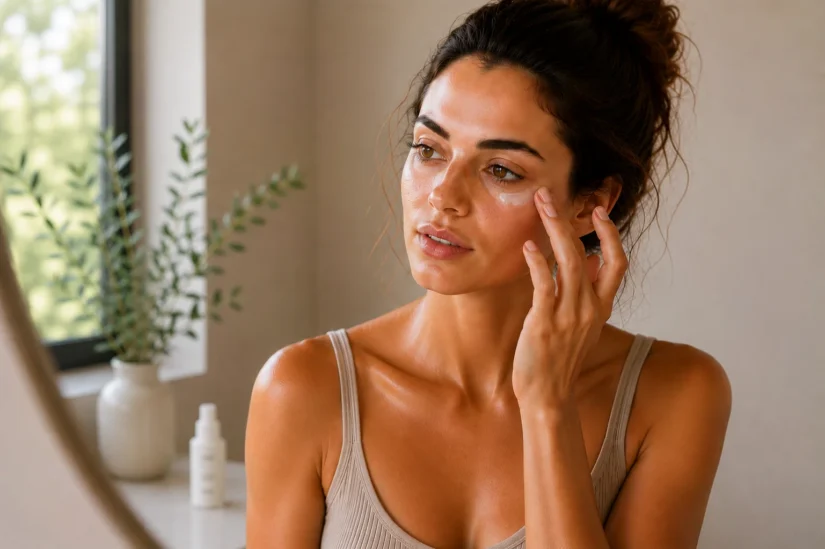
Eye cream: do you need one? How to tell based on your skin, what ingredients help with dark circles, puffiness, and fine lines, and when you can skip it.
If you’ve ever stood in front of a skincare shelf wondering whether that tiny jar of eye cream is worth it, you’re not alone. It’s one of the most debated products in skincare – some people swear by it, others think it’s just an overpriced moisturizer in a smaller container.
So do you need eye cream, or can you just use whatever you put on the rest of your face? Is eye cream even necessary? It depends. Not on what beauty brands tell you, but on your skin, your concerns, and what you’re already using.
Key Takeaways
- The skin around your eyes is thinner than the rest of your face, has fewer oil glands, and moves constantly. That’s why it ages faster and dries out sooner.
- You don’t always need a separate eye cream. If your face moisturizer is gentle, fragrance-free, and doesn’t irritate your eyes, it can work for the eye area too.
- Eye cream makes more sense if you have specific concerns like dark circles, puffiness, or fine lines – because it contains targeted ingredients your moisturizer probably doesn’t.
- The biggest difference between eye cream and face moisturizer isn’t magic ingredients – it’s formulation. Eye creams tend to be lighter, less likely to cause irritation, and tested for the eye area.
- If you’re in your early 20s with no eye concerns, your moisturizer is probably enough. If you’re noticing changes around your eyes, that’s when a dedicated product starts making sense.
Why Is the Skin Around Your Eyes So Different?
Before answering do you need eye cream, it helps to understand why the eye area gets its own category in skincare.
The skin under and around your eyes is different from the rest of your face in a few important ways:
- It’s thinner. The skin around your eyes can be roughly half as thick as the skin on your cheeks. Thinner skin means blood vessels show through more easily (hello, dark circles) and fine lines appear sooner.
- It has fewer oil glands. Less natural oil means this area dries out faster than the rest of your face. Your forehead and nose produce plenty of oil to keep themselves moisturized. Your under-eye area doesn’t have that advantage.
- It moves constantly. You blink around 15,000-20,000 times a day. You squint, you smile, you rub your eyes when you’re tired. All that movement creates creases that eventually become fine lines and crow’s feet.
- It tends to show signs of aging early. Because of everything above – thinner skin, less oil, constant movement – the eye area is often where aging becomes visible before the rest of your face.
None of this means you automatically need eye cream. But it does mean the eye area has different needs than the rest of your face, and your regular moisturizer may or may not be meeting those needs.
Do You Actually Need Eye Cream?
Straight answer: not everyone does, but most people benefit from it at some point.
If you’re in your early 20s, have no dark circles, no puffiness, no fine lines, and your skin isn’t particularly dry around the eyes – your regular moisturizer is probably doing the job. There’s no reason to add a product you don’t need yet.
But if any of these sound familiar, that’s when dedicated eye cream starts making a difference:
- You notice fine lines forming. Even subtle ones. The earlier you start treating them, the less pronounced they tend to become over time. Ingredients like peptides and low-strength retinol in an eye cream can help here in ways your face moisturizer probably can’t.
- Your under-eyes look dark or puffy in the morning. Dark circles and puffiness have specific causes – thin skin, fluid retention, visible blood vessels. Eye creams with caffeine, vitamin C, or niacinamide target these concerns directly.
- The skin around your eyes feels tight or dry. If your face moisturizer feels fine on your cheeks but your eye area still feels dry, the moisturizer may be too heavy or not hydrating enough for that thinner skin.
- Your face products sting or irritate your eyes. Many face moisturizers contain active ingredients like retinol, AHAs, or fragrances that can irritate the delicate eye area. If your moisturizer makes your eyes water or sting, you need something gentler for that zone.
Eye Cream vs Face Moisturizer: What’s the Difference?
This is the core of the “do you need eye cream” debate. The differences are smaller than you’d think but they matter:
| Eye Cream | Face Moisturizer | |
|---|---|---|
| Formulation | Lighter, less likely to clog pores around eyes | Heavier, may contain pore-clogging ingredients |
| Fragrance | Usually fragrance-free | Often contains fragrance |
| Active ingredients | Targeted (caffeine, peptides, vitamin C) | General (hyaluronic acid, niacinamide) |
| Tested for eye area | Yes | Not always |
| Texture | Gel-like or light cream | Ranges from light to rich |
| Price per ml | Higher | Lower |
| Jar size | 15-30ml | 50-100ml |
What it comes down to: Eye cream isn’t a fundamentally different product. It’s a moisturizer formulated specifically for thinner, more sensitive skin. If your face moisturizer is already gentle, fragrance-free, and doesn’t irritate your eye area, you can use it around your eyes. Many dermatologists agree on this.
But here’s where eye cream earns its place: If you have specific eye concerns – dark circles, puffiness, crow’s feet – your face moisturizer isn’t going to contain the targeted ingredients to address those. Caffeine for depuffing, peptides for firming, vitamin C for brightening – these are the ingredients that make eye cream more than just “small jar, big price.”
A note on expectations: Eye cream can improve the appearance of dark circles, reduce puffiness, and soften fine lines with consistent use. But it can’t change genetics, erase deep wrinkles, or fill in volume loss. If your dark circles are structural (thin skin showing blood vessels), no cream will permanently fix that. It can make them less noticeable, but managing expectations matters.
How to Choose the Right Eye Cream
Some eye creams are well-formulated with effective ingredients. Others are basic moisturizers in a smaller jar with a higher price tag. The difference is in the ingredient list:
Match the ingredient to your concern:
| Concern | Look For |
|---|---|
| Dark circles (blue/purple) | Caffeine, vitamin K |
| Dark circles (brown/pigment) | Vitamin C, niacinamide |
| Puffiness | Caffeine, green tea |
| Fine lines | Peptides, low-strength retinol, bakuchiol |
| Dryness | Hyaluronic acid, squalane, ceramides |
| General anti-aging | Peptides, antioxidants |
Avoid fragranced eye creams. The eye area is sensitive. Fragrance can be a frequent cause of irritation around the eyes.
Lighter is usually better. Heavy, rich creams can cause milia – those tiny white bumps that form when pores get clogged. A gel or light cream texture absorbs better around the eyes.
Apply with your ring finger. It’s your weakest finger, which means you’re less likely to pull or tug the delicate skin. Tap gently along the orbital bone, from the inner corner outward.
Use consistently. Eye cream isn’t a one-time fix. The ingredients need weeks of consistent use to show results. If you use it three times and decide it doesn’t work, you haven’t given it a fair shot.
How to Apply Eye Cream the Right Way
Getting the most out of your eye cream comes down to technique. The skin around your eyes is delicate, so how you apply matters as much as what you apply.
Use your ring finger. It’s your weakest finger, which means you naturally apply less pressure. This prevents tugging or pulling on thin skin.
Amount: A grain of rice per eye is enough. More than that and the product can migrate into your eyes or sit on the surface without absorbing.
Tap, don’t rub. Gently tap the product along the orbital bone – the curved bone that surrounds your eye socket. Start at the inner corner and work outward.
Stay on the bone. Don’t apply directly under your lashes or on your eyelid unless the product specifically says to. Applying too close can cause irritation or blurry vision.
When in your routine: After serum, before moisturizer. Eye cream goes on clean skin that’s already been treated with any water-based serums. Your moisturizer goes on top to seal everything in.
Morning and night. Most eye creams can be used twice daily. If yours contains retinol, stick to nighttime only – retinol can increase sun sensitivity.
FAQ
Do you really need eye cream or is moisturizer enough?
It depends on your skin. If your moisturizer is gentle, fragrance-free, and doesn’t irritate your eye area, it can work. But if you have specific concerns like dark circles, puffiness, or fine lines, a dedicated eye cream with targeted ingredients will do more than a general moisturizer.
At what age should you start using eye cream?
There’s no set age. Many people start in their late 20s when they first notice fine lines or dryness around the eyes. But if you’re younger and already dealing with dark circles or puffiness, starting earlier can help. Using eye cream as a preventive measure in your mid-20s is reasonable. For a deeper look at how your eye care routine should change over time, check out our guide to when to start using eye cream.
Can I use my face cream around my eyes?
You can, as long as it’s gentle and fragrance-free. But face creams often contain active ingredients like retinol or AHAs at concentrations that may irritate the thinner skin around your eyes. If your face cream doesn’t sting or cause redness near your eyes, it’s probably fine.
What’s the best ingredient in eye cream?
There’s no single best ingredient – it depends on your concern. Caffeine for puffiness, peptides for fine lines, vitamin C for dark circles, hyaluronic acid for dryness. Choose based on what you’re trying to improve rather than following a trend.
Why is eye cream so expensive for such a small jar?
Eye creams tend to be more concentrated and contain higher levels of active ingredients in a smaller volume. You also use very little per application – a pea-sized amount covers both eyes. A 15ml jar can last 2-3 months with daily use.
Can eye cream cause milia?
Rich, heavy eye creams can contribute to milia in some people, especially if applied too close to the lash line. Using a lighter formula and applying it along the orbital bone (not directly under the lashes) can help prevent this.
How do I apply eye cream correctly?
Use your ring finger to scoop a small amount – roughly the size of a grain of rice per eye. Tap it gently along the orbital bone from the inner corner outward. Don’t rub or pull. Apply after serum and before moisturizer.
Is eye cream worth it if I already have a good skincare routine?
If your routine addresses your eye concerns, you may not need a separate product. But if you’re using active ingredients on your face that you can’t use near your eyes (like strong retinol), an eye-specific product fills that gap safely.
Whether you end up using eye cream or not, what matters most is that the skin around your eyes gets some attention. That might mean a dedicated product, or it might mean being more careful about how you apply your existing moisturizer. Either way, understanding why this area is different puts you in a better position to take care of it.
More Articles About Skincare
- Under Eye Patches: Do They Actually Work?
- Retinol Not Working? Here’s Why (And What to Do Instead)
- Summer Skincare Routine
Disclaimer: This article is for informational purposes only and does not replace professional dermatological advice. If you have persistent skin concerns around your eyes, consult a dermatologist for personalized recommendations.
Written by Pure as Beauty