
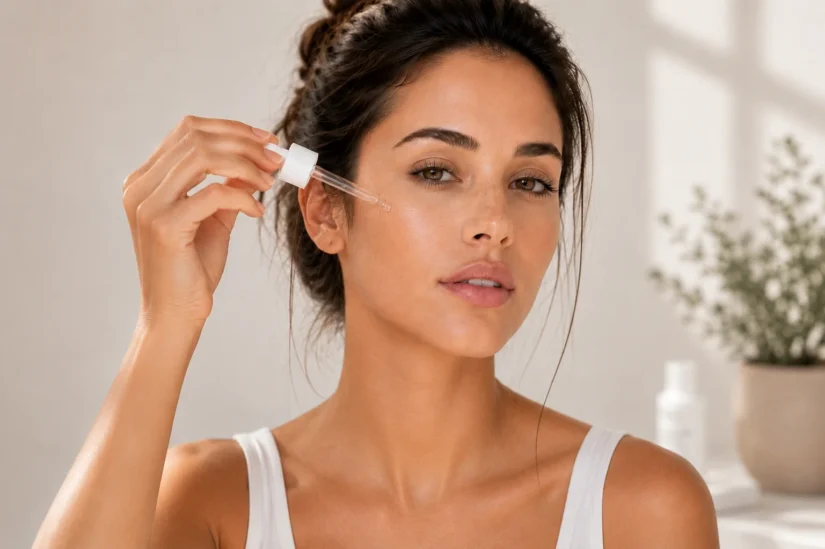
Can you use retinol in summer? You don’t have to stop – but your routine needs to change. How to adjust for warm weather, when to pause, and what to use instead.
Retinol is one of the few skincare ingredients that actually delivers on its promises – but every summer, the same debate comes back. Can you use retinol in summer? Should you stop using it when the weather gets warm? Or is that just an outdated rule that stuck around longer than it should have?
You can keep using retinol in summer – but your routine needs a few adjustments. Retinol doesn’t become dangerous when temperatures rise. It does make your skin more sensitive to UV, which means the way you protect your skin matters more than whether you use retinol at all. Stopping it entirely for three months means losing the progress you’ve built up, and that’s not a trade-off most people need to make.
Key Takeaways
- You don’t have to stop using retinol in summer. If your skin is already used to it and you wear SPF daily, you can continue year-round.
- Retinol increases photosensitivity, which means your skin is more vulnerable to UV. This is manageable with proper sun protection, not by avoiding the ingredient.
- Always apply retinol at night. Sunlight breaks down the active ingredient and reduces its effectiveness, so nighttime application protects both your skin and the product.
- If you’re new to retinol, summer isn’t the best time to start. Wait until fall when sun exposure is lower and your skin can adjust without extra UV stress.
- SPF 30 or higher every morning should be a given when using retinol – but that applies year-round, not just in summer.
Does Retinol Make Your Skin More Sensitive to the Sun?
Retinol can cause dryness, redness, peeling and irritation, particularly when you first introduce it or increase how often you use it. These effects can make sun exposure less comfortable, especially if your skin is already irritated.
Retinol is also sensitive to light, which is one reason many products are designed for nighttime use. Follow the directions for your specific product and use broad-spectrum sunscreen during the day, whether or not you use retinol.
The key distinction is that irritation from retinol and sun damage are not the same thing. Both can cause redness or discomfort, and it may not always be possible to tell them apart based on appearance alone. If your skin becomes persistently irritated, simplify your routine and seek professional advice if symptoms are severe or do not improve.
How to Use Retinol in Summer Without Damaging Your Skin
How to Use Retinol in Summer Safely? If your skin already tolerates retinol, you can use it through summer with a few adjustments.
Tips for Using Retinol Safely in Summer
- Follow the product directions. Many retinol products are intended for nighttime use. Apply yours as directed rather than assuming all formulations behave the same way.
- Use broad-spectrum sunscreen every morning. Choose at least SPF 30 and reapply as directed on the label, particularly when spending time outdoors, swimming or sweating.
- Adjust frequency if irritation develops. If your skin becomes dry, red or flaky, reduce how often you use retinol or pause until your skin settles. You do not need to follow a fixed summer schedule if your skin is comfortable with your existing routine.
- Keep moisturizing. Choose a moisturizer that helps your skin feel comfortable. Ingredients such as glycerin and ceramides may be useful options, depending on the formula and your skin’s needs.
- Avoid piling on irritating products. If retinol leaves your skin sensitive, consider separating it from exfoliating acids or other products that cause irritation. The right combination depends on your products and how well you tolerate them.
- Avoid applying retinol to sunburned or visibly irritated skin. Allow your skin to recover before considering its reintroduction.
Retinol Sensitivity vs Sun Damage: How to Tell the Difference
If your skin is red or irritated during summer retinol use, it helps to know whether the cause is retinol or the sun.
Retinol sensitivity usually shows up within a few days of starting or increasing your retinol. It tends to appear where you applied the product most heavily – chin, jawline, around the nose. The skin feels tight, dry, and slightly flaky. It looks like mild redness, not pain. Reducing frequency or concentration and adding more moisturizer usually clears it up within a few days.
Sun damage is different. It appears within hours after sun exposure, shows up on exposed areas like your forehead, nose, cheeks, and chest, and feels hot, tender, or painful. Redness is more intense and can come with warmth or even blistering. It takes longer to heal – sometimes a week or more.
If you’re not sure which one it is: Stop retinol for a few days and see if the irritation improves. If it clears up without sun exposure changing, it was likely retinol sensitivity. If it appeared after a day in the sun, it’s sun-related. Either way, extra moisturizer and gentle skincare help both. Never apply retinol to sunburned skin – wait until it’s fully healed.
Should You Stop Retinol Before a Beach Vacation?
A beach vacation does not automatically mean you must stop retinol. However, long periods outdoors can make sun protection more challenging, and irritated skin may be less comfortable in these conditions.
Consider your usual tolerance, how much direct sun you expect and whether you can reliably protect your skin with sunscreen, shade, clothing and regular reapplication. If retinol has been causing dryness, peeling or redness, taking a break may be sensible.
| Situation | What to consider |
|---|---|
| Regular summer days | Continue if your skin tolerates the product and you maintain sun protection. |
| Outdoor activities | Plan for sunscreen, shade and protective clothing; reduce or pause retinol if irritation develops. |
| A beach holiday with prolonged sun exposure | Consider simplifying your routine, particularly if your skin is already irritated. |
| Starting retinol for the first time | Choose a time when you can introduce it gradually and monitor your skin’s response. There is no universal rule that everyone must wait until fall. |
When you return, resume according to your product’s directions and your skin’s condition. If you paused because of irritation or sunburn, wait until your skin has recovered rather than restarting on a predetermined date.
What to Use Instead of Retinol in Summer
If you choose to pause retinol, you can keep your routine simple rather than replacing it with another active ingredient. A gentle cleanser, moisturizer and broad-spectrum sunscreen may be sufficient for your basic routine.
Depending on your goals, other ingredients may offer different benefits:
| Ingredient | Potential role | Important distinction |
|---|---|---|
| Bakuchiol | Studied for potential benefits related to skin appearance and texture | Evidence is more limited than for retinoids; it is not a proven one-to-one replacement. |
| Niacinamide | May support the skin barrier and improve the appearance of uneven tone | Benefits depend on the formulation and concentration. |
| Peptides | Used in some formulas targeting the appearance of fine lines | Evidence varies by peptide and product. |
| Vitamin C | An antioxidant ingredient often used to improve the appearance of uneven tone | It does not replace sunscreen. |
| Azelaic acid | May help with uneven tone and blemish-prone skin | Suitability depends on individual skin tolerance and the product. |
You do not need to replace retinol with another active ingredient during a break. Choose products based on your main skincare goal and how comfortably your skin tolerates them.
How to Adjust Your Retinol Routine for Summer
| Winter | Summer | |
|---|---|---|
| Frequency | Daily or every other night | 2-3 times per week |
| SPF | SPF 30+ daily | SPF 30+ daily + reapply outdoors |
| Moisturizer | Rich cream | Lightweight gel or lotion |
| Active layering | Can combine with other actives (carefully) | Simplify – fewer actives on retinol nights |
| Concentration | Can increase gradually | Maintain or lower |
| Pause needed? | Rarely | Before heavy sun exposure |
| New users | Good time to start | Wait until fall |
The product itself doesn’t change. How you support your skin around it does.
FAQ
Can you use retinol in summer?
Yes, if your skin is already adjusted to it. Apply at night, wear SPF 30+ every morning, and reduce frequency to 2-3 times per week. If you’re new to retinol, wait until fall to start.
Does retinol cause sunburn?
Retinol doesn’t cause sunburn directly. It increases photosensitivity by revealing newer skin cells that are more reactive to UV. With proper sunscreen, the risk of burning isn’t significantly higher than without retinol.
Should I stop retinol before going on vacation?
If your vacation involves heavy sun exposure (beach, pool, hiking), pause retinol a few days before and resume when you’re back. For regular travel with normal sun exposure, you can continue with SPF.
Can I use retinol during the day in summer?
No – retinol should always be applied at night, regardless of season. Sunlight degrades the active ingredient, making it less effective. Nighttime application is about protecting the product’s potency, not just your skin.
How often should I use retinol in summer?
Two to three times per week works well for most people in summer. If your skin feels irritated, dry, or red, reduce further. Your skin is already under more stress from heat and humidity.
What is bakuchiol and is it a good summer alternative?
Bakuchiol is a plant-derived ingredient that works similarly to retinol – improving texture, tone, and fine lines – but without increasing sun sensitivity. It’s a good option if you want to pause retinol during peak summer weeks.
Can I wear retinol and vitamin C together in summer?
You can, but not at the same time. Use vitamin C in the morning (it provides antioxidant protection against UV) and retinol at night. Layering them together can cause irritation, especially in summer when your skin is already working harder.
What SPF should I use with retinol?
SPF 30 is the minimum. SPF 50 is better if you’ll be spending time outdoors. Choose a broad-spectrum formula that protects against both UVA and UVB rays. Reapply every two hours if you’re outside.
Can I use retinol in summer if I have melasma?
Be extra cautious. Retinol can help treat melasma, but the condition is highly sensitive to UV exposure. If you continue retinol in summer with melasma, strict sun protection is critical – SPF 50, wide-brimmed hats, and avoiding peak sun hours. Some people with melasma find it easier to switch to bakuchiol during peak summer months and resume retinol in fall. Talk to a dermatologist for personalized advice.
Retinol in summer comes down to one principle: protect what retinol reveals. The ingredient itself isn’t seasonal – it works the same way in July as it does in January. What changes is how much UV your skin faces, and how well you shield it. Adjust your frequency, commit to sunscreen, and your retinol routine can run year-round without a problem.
More Articles About Beauty
- Retinol Not Working? Here’s Why (And What to Do Instead)
- Summer Skincare Routine
- Sweat-Proof Makeup: How to Make Your Look Last All Summer
Disclaimer: This article is for informational purposes only and does not replace professional dermatological advice. If you have specific skin concerns, consult a dermatologist for personalized recommendations.
Written by Pure as Beauty