
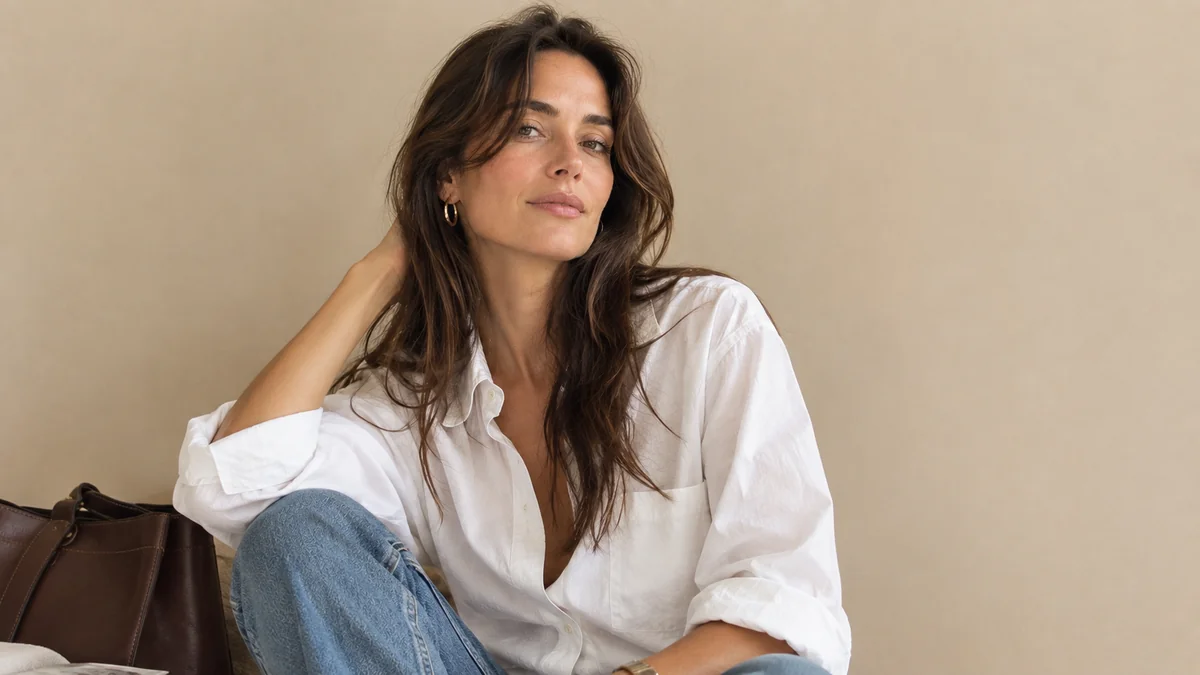
What does kinda chic mean? Discover why the 2026 trend went viral, what makes something kinda chic, how it has entered fashion and beauty, and why the internet is already tired of it.
There is a new phrase attached to almost everything on Instagram and TikTok: kinda chic.
Repeating the same outfit? Kinda chic. Going to dinner alone? Kinda chic. Keeping your nails short? Kinda chic. Starting over in your 30s? Apparently, that is kinda chic too.
What makes the kinda chic trend interesting is how much the phrase has come to include. The phrase began circulating widely in spring 2026 before making its way into celebrity feeds, fashion coverage and brand campaigns. By August, it had become one of the summer’s most recognizable social media formats.
What makes the kinda chic trend interesting is how much the phrase has come to include.
For a word traditionally associated with elegance, taste and a certain amount of polish, “chic” has suddenly become a label for getting older, repeating an outfit, calling your mother, embracing cellulite or simply doing something because it feels right to you.
And perhaps inevitably, once everyone started using it, people started getting tired of it.
What Is Kinda Chic?
Kinda chic is a 2026 social media trend that reframes ordinary, personal or unexpected choices as stylish, desirable or cool.
The phrase began appearing widely on Instagram and TikTok in spring 2026, usually as a short caption layered over a photo or video. The format is simple: “kinda chic to…” followed by a habit, choice or quality that the creator wants to celebrate.
Repeating an outfit, going to dinner alone, keeping your nails short or embracing grey hair can all fall under the trend. Some posts are funny and deliberately trivial; others touch on ageing, body confidence, relationships or starting over.
The appeal comes from the contrast. Things that might once have been overlooked, considered unfashionable or treated as imperfections are given a more flattering frame. Rather than presenting a polished version of life, the trend finds something appealing in choices that already feel personal and lived-in.
“Kinda” also keeps the phrase deliberately casual. It softens the idea of calling something chic and leaves room for humour, individuality and interpretation.
That makes the trend different from a traditional fashion aesthetic. There is no fixed colour palette, silhouette or beauty routine to follow. Kinda chic is better understood as a way of looking at personal choices than as a specific way of dressing.
Why Did the Kinda Chic Trend Go Viral So Fast?
Part of the appeal is that the format requires almost nothing.
There is no choreography to learn, no complicated editing and no product to buy. A photograph and a few words are enough.
It is also remarkably flexible. The same format can work for an outfit, a beauty habit, a personal milestone or a joke about everyday life. That made it easy to copy while still allowing people to make the message their own.
Celebrity participation pushed the trend further into the mainstream.
Reese Witherspoon used the format to celebrate being underestimated, cheering on other women and calling your mom. Drew Barrymore’s version focused on being in her 50s, while Ashley Graham used the format to challenge the idea that cellulite should be hidden.
These examples helped broaden the trend beyond fashion. Something that might once have been treated as a flaw, a mundane habit or simply not worth mentioning could suddenly become something worth celebrating.
That combination — an easy format, endless possibilities and a message people could adapt to their own lives — gave kinda chic much more room to spread than a typical fashion microtrend.
What Makes Something “Kinda Chic”?
There are no official rules for what counts as kinda chic. The phrase can be attached to a fashion choice, a beauty habit, a small indulgence or something that would barely seem worth mentioning otherwise.
Looking at the way the trend has been used online, though, the same ideas tend to come up: everyday choices, things people have been taught to hide, and details that have become unmistakably personal.
The Everyday Things
Repeating an outfit. Going to bed early. Eating alone. Doing your own manicure. Carrying the same bag every day.
None of these things is particularly groundbreaking. They are simply things people do — which is part of their appeal.
Wearing the jacket you always reach for can feel more authentic than buying something new for every occasion. Ordering the same coffee, taking yourself out to dinner or putting on the same lipstick for the hundredth time can have a similar charm.
The trend turns these small routines into something worth noticing. There is a quiet confidence in knowing what you like and not feeling obliged to replace it just because something newer has appeared online.
The Things We Were Told to Hide
Some examples carry more weight.
Ageing, cellulite, grey hair, being underestimated or starting over can all be described as kinda chic. These are things that have often been presented as problems — something to conceal, correct or overcome.
That is where the trend brushes up against beauty culture.
Grey roots can grow in. This does not always need fixing; it can simply be part of you. Skin can have texture. Getting older can be part of someone’s style rather than something that has to be edited out of it.
In that sense, the trend offers a small counterpoint to the constant pressure to improve, smooth and perfect.
The Things That Feel Like You
Then there are the details that would probably seem unremarkable to anyone else.
A favourite lipstick. The perfume you have worn for years. Short nails. A pair of sunglasses that has become part of your look. The handbag you carry almost every day.
These choices become interesting because they have history. They are not necessarily the things a trend report would tell you to buy. They are the things you have kept choosing.
That distinction matters in fashion and beauty. Personal style develops through repetition — the colours you return to, the makeup you know works, the hairstyle that feels familiar and the little details you never seem to get tired of.
The most convincing choices are often the ones that would still make sense if nobody were watching.
How to Dress Kinda Chic
There is no single kinda chic outfit, colour palette or dress code. The trend is less about following a specific aesthetic and more about making familiar pieces feel personal.
Start with clothes you already wear and genuinely like. Repeat a favourite outfit, bring an older coat back into rotation or carry a handbag that has picked up a little wear. The idea is to build an outfit around pieces that have a place in your wardrobe rather than buying everything specifically for the trend.
A few combinations capture the mood particularly well:
- Tailored trousers with a simple T-shirt
- A classic coat with worn-in sneakers
- A favourite handbag with an otherwise polished outfit
- Jeans and a well-loved knit with minimal accessories
- An older statement piece styled with everyday basics
The contrast is often what makes the outfit interesting. Something polished can be paired with something relaxed, while a familiar piece can make a more dressed-up look feel less predictable.
The result should still look like an outfit rather than an attempt to appear effortless. The difference is that it feels lived-in, repeatable and personal rather than assembled entirely from current trends.
Kinda Chic vs. Quiet Luxury
Kinda chic and quiet luxury can overlap visually, but they represent different approaches to style.
| Kinda Chic | Quiet Luxury | |
|---|---|---|
| Focus | Personal choices and everyday style | Understated luxury and refinement |
| Clothing | Existing, repeated and personal pieces | Elevated basics and quality materials |
| Branding | Not important | Usually subtle or absent |
| Attitude | Casual, playful and individual | Polished, restrained and sophisticated |
Quiet luxury became popular through its emphasis on discreet quality, classic silhouettes and pieces that do not rely on obvious logos. Kinda chic does not require an expensive wardrobe or a carefully coordinated aesthetic.
That is why the two trends can sometimes look similar but feel different. A cashmere coat, tailored trousers and leather loafers could fit a quiet luxury wardrobe. Wearing that same coat for years because it is your favourite is closer to the spirit of kinda chic.
The distinction is ultimately about why you are wearing something. Quiet luxury is concerned with a particular visual language. Kinda chic is more interested in personal attachment, familiarity and the freedom to keep choosing what works for you.
What Does Kinda Chic Mean for Beauty?
Beauty is where the trend becomes particularly interesting.
For years, beauty culture has encouraged constant improvement: the newest product, the latest treatment, a better technique, a more polished finish. The beauty side of kinda chic offers a different perspective — one that puts more emphasis on familiar routines, personal preferences and features that do not need to be constantly changed.
Instead of asking what is trending, the question becomes simpler: what already works for you?
Kinda Chic Hair
Hair does not have to look freshly styled every morning to feel polished.
Natural texture, loose waves, a familiar blowout or the same updo you have worn for years can all fit the mood. A hairstyle can become part of someone’s identity rather than another look to recreate from social media.
That might mean wearing your natural curls, returning to a favourite hairstyle or letting yesterday’s waves become today’s texture. The result feels personal without looking deliberately undone.
Kinda Chic Makeup
A familiar makeup routine can be more personal than a collection of products chosen to recreate every new beauty trend.
It might be the same concealer, blush and lipstick combination you have been reaching for for years, or simply a few products that make you feel polished without requiring much thought. Skin can still look like skin; makeup does not need to be completely undetectable or perfectly sculpted.
Knowing which shades, textures and finishes work for you — and continuing to wear them — is part of what gives a beauty routine its identity.
Kinda Chic Nails
Short nails, sheer polish and a simple manicure fit naturally into the trend’s more personal approach to beauty.
That does not make elaborate nail art any less appealing. It simply suggests that beautiful nails do not have to follow whatever manicure is dominating TikTok that week.
A favourite sheer pink, short natural nails or an imperfect at-home manicure can feel just as considered when it reflects what you actually like.
Kinda Chic Fragrance
Fragrance may be one of the easiest beauty details to make your own.
A signature scent does not have to be the perfume everyone is currently talking about. Wearing the same fragrance for years because it has become associated with you can feel more personal than constantly changing scents to follow new launches.
Over time, these small choices become part of how people recognise you. A familiar scent, like a favourite lipstick or hairstyle, can become a subtle part of your identity rather than simply another beauty trend to try.
The Little Details That Make a Look Feel Kinda Chic
Sometimes it is the smallest details that make an outfit feel finished.
Vintage sunglasses, a well-worn leather bag, a favourite pair of earrings or a coat you have owned for years can give a look more character than adding another new trend piece.
The same applies to styling. Rolling up the sleeves of a blazer, leaving a shirt slightly untucked, mixing an older piece with something more polished or wearing jewellery you rarely take off can make an outfit feel more personal.
These details do not need to be expensive. What matters is that they feel familiar enough to have become part of your style.
That is where the trend connects with personal style: the pieces and styling habits you keep returning to eventually become more recognisable than whatever happens to be trending that week.
Why Does Kinda Chic Feel So Relatable?
The trend arrived at a moment when almost every part of life can become content.
Your morning routine should be optimized. Your wardrobe should have a point of view. Your home should be photogenic. Your holiday should look effortless. Even relaxing can start to feel like something you are supposed to do correctly.
Against that background, the appeal of kinda chic makes sense.
The format gives ordinary choices a little more significance without asking people to take themselves too seriously. The phrase itself keeps things light, so sharing something personal does not have to feel like making a big statement about who you are.
Going somewhere alone does not need to become a five-slide lesson in self-love. Wearing the same jacket again does not need to become a statement about sustainable fashion.
Sometimes you simply like the jacket.
That simplicity is part of what made the trend so easy to share. It gives people a way to talk about personal choices, small habits and things they enjoy without turning every post into a manifesto.
The Kinda Chic Paradox
The trend’s biggest strength eventually became its biggest weakness.
Kinda chic encouraged people to decide for themselves what felt stylish, worthwhile or cool. Yet the more popular the format became, the more predictable the posts started to look.
The pale yellow text, the sentence structure, the carefully casual photographs — eventually, the format itself became as recognizable as the ideas inside it.
Fashion editor Brenda Weischer described this wider social media phenomenon as “template slop”: content built from increasingly familiar fonts, hooks and formats that can be reproduced almost endlessly.
Kinda chic is a particularly good example of that cycle. Something that began as a way to make an individual observation became a recognizable template that thousands of people could reproduce.
Brands followed, too. Boots adapted the language for SPF reapplication, turning a phrase associated with personal style and everyday choices into branded content.
That does not make the original idea meaningless. It simply shows what happens when an internet expression becomes popular enough to move beyond the people who created it.
The irony is hard to miss: a trend about deciding what is chic for yourself became a formula for everyone to follow.
Is Kinda Chic Already Over?
The backlash arrived quickly. By early August, people were already reversing the formula into “kinda not chic to…” and making fun of how often the phrase appeared in their feeds.
That does not necessarily mean the trend has disappeared. Internet trends tend to move quickly from discovery to imitation, saturation and parody, sometimes within a single season.
Kinda chic may be reaching that stage now. The underlying ideas — wearing what you love, embracing your age, repeating an outfit — are unlikely to disappear simply because the phrase has become overused.
So, What Does Kinda Chic Really Mean?
The most interesting part of the kinda chic trend is how far the idea has moved beyond clothes.
Something can feel kinda chic because it is personal, familiar or simply enjoyable. It can be a beauty routine you have no reason to change, an outfit you keep wearing, a fragrance that has become part of your identity or the confidence to do something on your own.
The phrase itself may eventually disappear from social media. That happens quickly now: a format is discovered, copied, commercialized, saturated and eventually mocked, sometimes within a single season.
But the idea underneath it is harder to dismiss.
Personal style does not necessarily come from having the newest pieces or following every beauty trend. Often, it comes from knowing what works for you and continuing to choose it.
The outfit you wear again. The old bag you still love. The lipstick you always reach for. The hairstyle that feels like yours.
None of these things needs to be a trend.
Sometimes, knowing what you like — and sticking with it — is enough.
More Articles About Trends
Disclaimer: This article is for informational purposes only. Styling guidance is a starting point rather than a set of rules. Images are AI-generated for illustrative purposes.
Written by Pure as Beauty